
Are There Fuses In Dimmer Switches?
Older dimmers did have fuses — soldered directly onto the board, never designed to be swapped out. When one blew, you replaced the whole dimmer anyway.
 Eugen
EugenEugen Nikolajev
Creator of LED Lighting Info
Hi, I am Eugen. I was always one of those kids who had all sorts of weird lighting gadgets for every occasion.
Now, I want to share my knowledge and experience about lighting with you on LED Lighting Info.
Read my editorial standards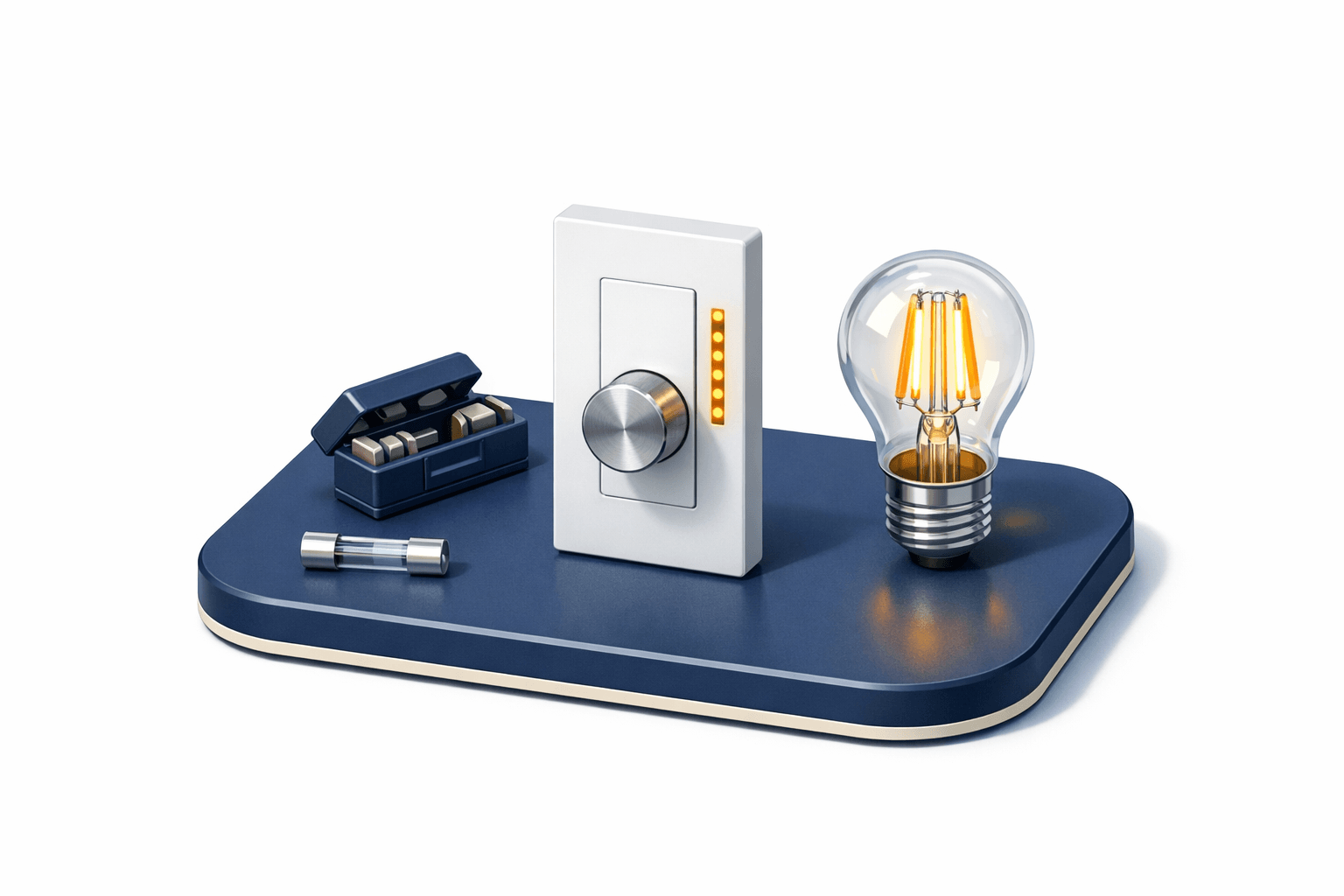
Key Takeaways
Older dimmer switches did have fuses to protect the switch and prevent dangerous temperatures if the unit got too hot. Unlike most fuses, they were integrated and difficult to replace. Modern dimmers have generally stopped using them, relying on built-in thermal protection and the household circuit breaker instead.
Fuses protect wiring and components by breaking the circuit when current exceeds a safe level. If something goes wrong — a short, an overload, a bulb failure — the fuse element melts and kills the power before anything else gets damaged.
Not every device has its own fuse, though. They add cost and complexity, so manufacturers only fit them where the protection is worth it. This is also why a dimmer can trip a breaker even when it has no internal fuse of its own.
So, are there fuses in dimmer switches?
📝 Note: this article covers the fuse inside the dimmer unit itself, not the fuse or breaker in your consumer unit, which is a separate protection system.
In this article I'll explain:
- Whether modern dimmers have fuses (and why older ones did)
- Why integrated dimmer fuses generally can't be replaced
- Why manufacturers stopped including them
- How to match a dimmer to your bulbs (wattage, minimum load, leading vs. trailing edge)
- Whether a faulty dimmer can trip your breaker
Is There A Fuse Inside The Dimmer Switch?
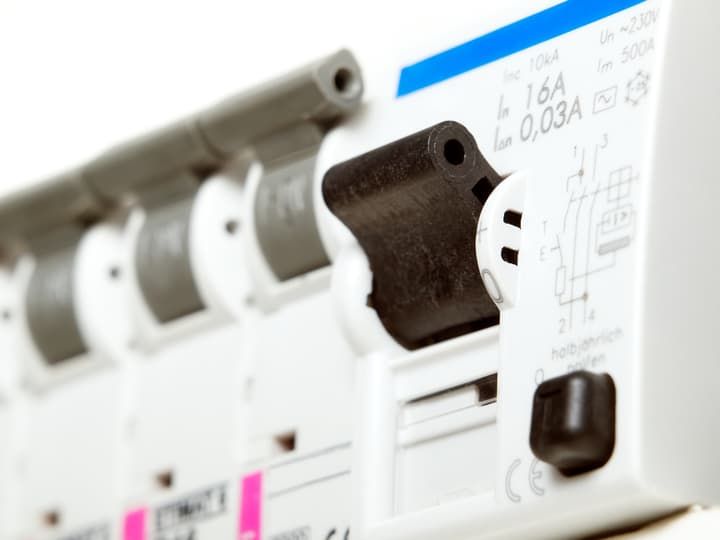
Not all dimmer switches have a fuse. It tends to be older units that do — most modern brands have dropped them. The fuses, when present, were integrated rather than something you could swap out.
There are real trade-offs to including a fuse in a dimmer switch — added cost, and once it blows you usually replace the whole unit anyway. Modern dimmers tend to use built-in thermal protection circuits instead, which are resettable rather than single-use.
If you have an older dimmer switch that includes a fuse and it's working fine, there's no rush to replace it.
What Was The Purpose Of The Fuse?
There were two main reasons for a fuse in a dimmer switch. The first was to protect the dimmer in case the bulb or fitting failed.
When an incandescent bulb fails, the breaking filament can briefly arc across its support wires, or a fragment can fall and short the contacts inside the base. Either event can momentarily draw very high current — enough to damage the dimmer's electronics or trip a breaker. There's also the inrush current at switch-on, when a cold filament has very low resistance and current can spike to 10–15× normal for a fraction of a second. An integrated fuse caught these stress events before they reached the dimmer's components.
The second reason was thermal protection. If the circuitry inside the dimmer overheated — from a sustained overload or a faulty connection — the fuse would blow and cut power. That stopped the switch from getting hot enough to start a fire.
Dimmer switches can get warm, but if yours is hot to the touch, that's a sign of a problem — switch off the circuit at the breaker and have it inspected before using it again.
Can The Internal Dimmer Switch Fuse Be Replaced?
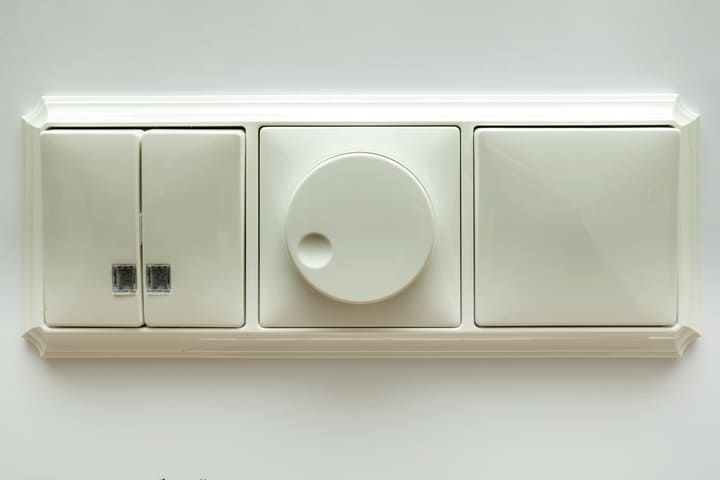
The fuses in older dimmer switches weren't the kind you can pop out and replace. In most cases they were soldered onto the internal board — not designed to be serviced by a homeowner.
That made the fuse fairly redundant as a protection for the dimmer itself, because once it blew you'd typically have to replace the whole dimmer anyway. It still served a purpose for the rest of the circuit, though — by isolating a faulty dimmer it stopped the problem propagating to the wiring or other fittings.
If you suspect your dimmer has failed (no power output, partial dimming range, buzzing, lights unresponsive), don't try to open the unit looking for a fuse to swap. Switch off the circuit at the breaker, check whether the dimmer is under warranty, and have a qualified electrician replace the whole switch.
Why Don't Dimmer Switches Have Fuses Anymore?
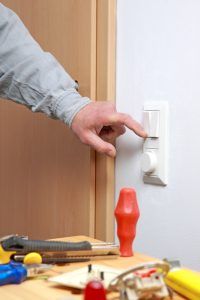
Three main reasons:
- Manufacturing cost. Fuses aren't expensive individually, but they're an extra component the manufacturer can leave out — and dimmer pricing is competitive enough that pennies matter.
- Modern bulbs rarely create the surge events fuses were designed to catch. Incandescents fail dramatically — arcs and shorts inside the bulb base. LEDs fail much more quietly, usually with the driver simply giving up. The risk profile has shifted.
- The protection has moved elsewhere. Modern dimmers use built-in thermal protection circuits, and the household circuit breaker handles overcurrent for the rest of the circuit. The integrated dimmer fuse was filling a gap that's mostly already covered.
There's a small downside if you're still using older incandescent or halogen bulbs: when one of those fails, the surge can damage a dimmer that has no internal fuse. A replacement LED bulb might cost a few dollars (incandescents have largely been phased out in the US since 2023 under DOE energy-efficiency rules), but a dimmer switch is a lot more — basic dimmers start around $10–$20, while smart or LED-optimized models typically run $20–$70.
There's also a bulb-orientation effect worth knowing about. When an incandescent fails, fragments of filament can fall inside the bulb and short the lead wires near the base. Bulbs installed base-down (filament hanging above the contacts) are slightly more prone to this kind of internal short — the opposite of what you might expect. With LEDs taking over, this scenario is becoming rare anyway.
Matching A Dimmer To Your Bulbs
Whether or not your dimmer has a fuse, the most common cause of a damaged dimmer is mismatching it with the bulbs on the circuit. There are three things to check: total wattage, minimum load, and dimming method.
Total Wattage
Every dimmer has a maximum wattage rating, and the combined wattage of all the bulbs on the circuit needs to stay below it. Residential LED-compatible dimmers commonly handle 600 W of incandescent or halogen, but their LED/CFL rating varies widely by model — typically between 150 W and 300 W. Always check the spec sheet.
| Dimmer Type | Typical Max Load | Notes |
|---|---|---|
| Incandescent / halogen dimmer | 400–600 W | Most common legacy rating |
| LED-compatible dimmer | 150–300 W | Check the manufacturer's LED-specific spec |
| Smart dimmer (e.g., Lutron Caseta) | 150–600 W (varies) | Always check the LED-specific rating |
For context: 600 W is ten 60-watt incandescent bulbs, the most common household size before the phaseout. Unless your dimmer controls multiple rooms, you'll usually be well under the limit.
Minimum Load
LED dimmers also have a minimum load — typically 10–25 W on the circuit — below which they won't operate correctly. Drop below the minimum and you'll see flicker, the lights may not start, or the dimming range collapses. If you're switching a single 8 W LED, check the dimmer's spec sheet; you may need a different model or an additional bulb on the circuit to clear the threshold.
Leading-Edge vs. Trailing-Edge
The third compatibility issue is the dimming method. Older TRIAC (leading-edge) dimmers were designed for resistive incandescent loads and often misbehave with LEDs — flicker, buzz, or refusal to dim smoothly. Trailing-edge (sometimes called ELV) dimmers handle modern LED drivers far better. Most dimmers sold today as "LED-compatible" are trailing-edge, but it's worth confirming on the packaging or spec sheet.
Can A Faulty Dimmer Switch Trip The Breaker?
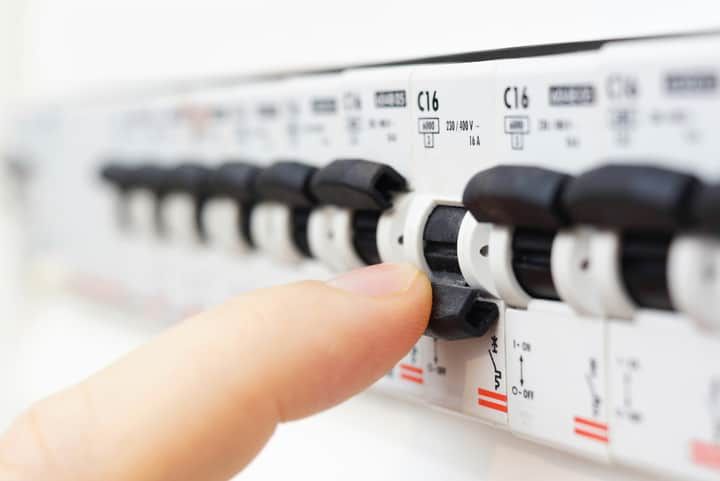
Yes — a faulty or overloaded dimmer can trip your home's circuit breaker (or blow the circuit fuse in older fuseboxes). To be clear, this is the breaker or fuse in your consumer unit, not the integrated dimmer fuse discussed earlier.
If the dimmer's wiring has been damaged — which can happen if it's been unscrewed for decorating — or a wire has come loose, it can cause arcing or shorting between conductors. That may trip the breaker on overcurrent, or trigger an arc-fault trip on an AFCI-protected circuit. Loose connections also tend to cause heating and flicker before they fail outright, so unexplained flicker is worth investigating.
The other common cause is exceeding the dimmer's wattage rating, or pairing a TRIAC dimmer with non-compatible LEDs. Either can stress the dimmer's electronics until something fails — sometimes silently, sometimes by tripping the breaker.
Final Words
Modern dimmers don't have integrated fuses — the protection has moved to built-in thermal circuits and the household breaker. The practical takeaway: stick with quality LED bulbs, match them to a dimmer rated for your total wattage and dimming type (trailing-edge for most LEDs), and check the LED-specific load rating before installing.
If a dimmer stops working entirely, switch off the circuit at the breaker, check whether the unit is under warranty, and have a qualified electrician replace the switch — there's no internal fuse to swap, so the unit itself is the part that needs changing.
FAQ
How do I know if my dimmer switch has blown?
Most modern dimmers don't have a user-replaceable fuse, so a "blown" dimmer is usually a failed component on the dimmer's circuit board. Common symptoms are lights that no longer respond to the dimmer, a collapsed dimming range, buzzing, or no power output at all. Switch off the circuit at the breaker before investigating, and replace the whole unit if it's faulty.
Will a blown bulb damage my dimmer?
It can, but it's relatively uncommon. The risk comes from the brief arc or short circuit that can occur inside an incandescent bulb when the filament fails. Modern LED bulbs fail in much less dramatic ways and rarely take the dimmer with them. Quality bulbs and a dimmer matched to your load reduce the risk further.
What's the minimum load on an LED dimmer?
Most LED-compatible dimmers specify a minimum load between 10 W and 25 W. Below that threshold the dimmer can flicker, fail to start, or behave erratically. If you're dimming a single low-wattage LED, check the manufacturer's spec sheet — you may need a different model or to add additional bulbs to the circuit.
Is the household circuit breaker the same as a dimmer fuse?
No. The breaker (or fuse in older UK consumer units) protects the entire circuit and lives in the consumer unit or breaker panel. The integrated fuse some older dimmers had was a separate, dimmer-only protection device on the switch itself. Both can interrupt the circuit, but the breaker covers far more than just the dimmer.