Why Do LED Daytime Running Lights Flicker? Diagnostic Quiz
Your car never actually dims the DRL — it rapidly switches 12V on and off. A halogen filament stays hot enough between pulses to hide it; an LED just flickers.
 Eugen
EugenEugen Nikolajev
Creator of LED Lighting Info
Hi, I am Eugen. I was always one of those kids who had all sorts of weird lighting gadgets for every occasion.
Now, I want to share my knowledge and experience about lighting with you on LED Lighting Info.
Read my editorial standards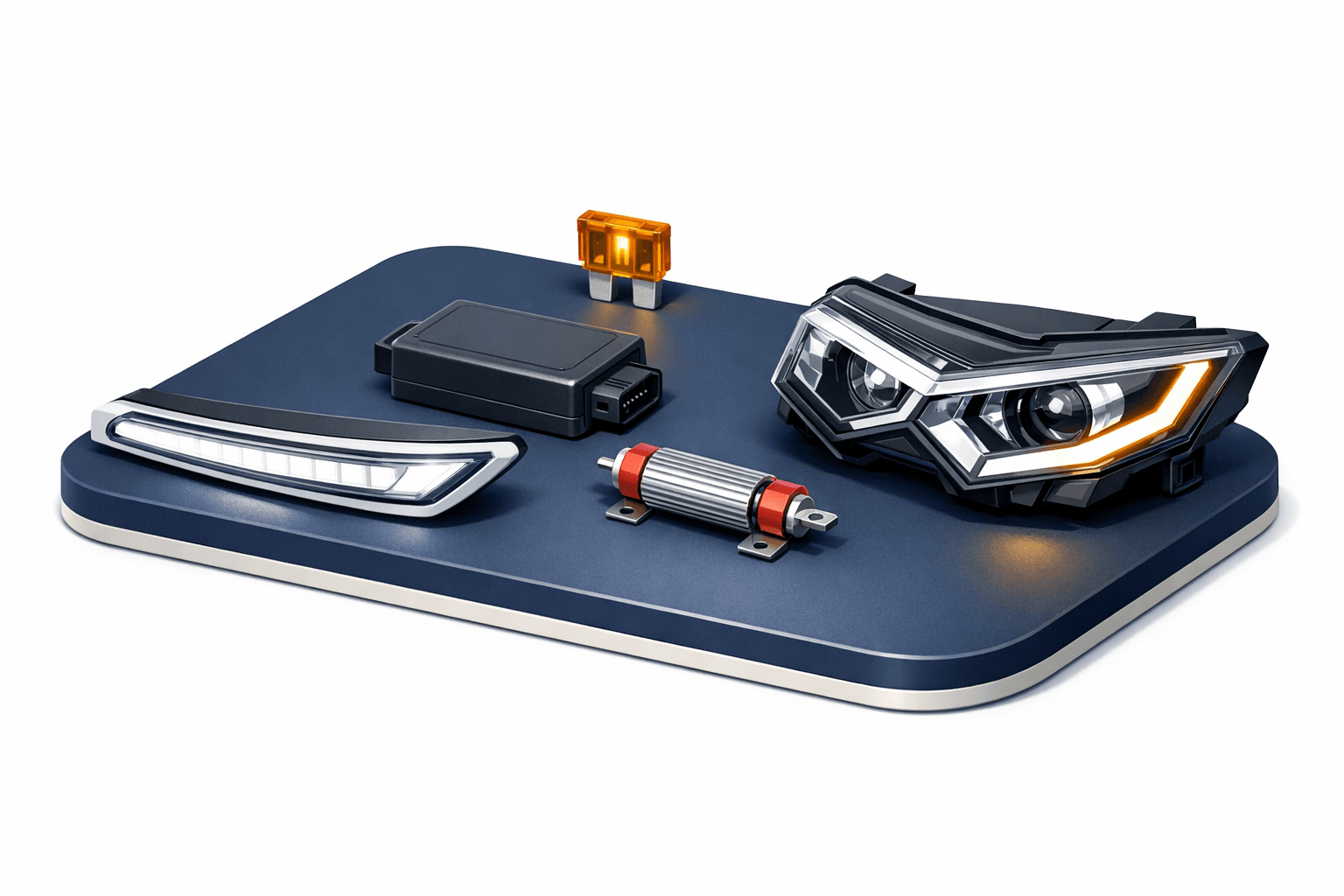
Key Takeaways
Installing LED DRLs causes flickering headlights and dashboard errors because LEDs draw far less power than halogens and respond instantly to the pulse-width-modulated (PWM) dimming signal modern cars use. The fix is to restore what the car's control system expects — install a CANBus decoder, a relay harness, or a load resistor, or buy a conversion kit with these built in.
LED DRL Flicker Cause Finder
Answer a few quick questions about your flickering LED daytime running lights and you'll get a likely cause and the right fix to try first.
7 questions — takes about a minute
Answers are anonymous and may be used to improve content.
You just upgraded to LED daytime running lights — but now they flicker, and your dashboard lit up with warnings. Here's exactly why it happens, and how to fix it.
How DRLs and High-Beams Share a Bulb
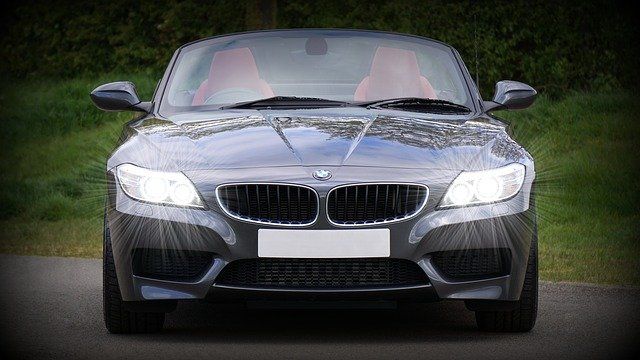
Your car's high-beams and daytime running lights (DRLs) serve very different roles — but in some vehicles they share a single bulb that operates at different power levels for each function.
High-beams are the brightest source of illumination for your vehicle on dark rural roads and open highways. They're directional, pointing out from the front of the car and lighting up roughly 350 to 500 feet (107 to 150 meters) ahead — about the distance between three street lights — compared to around 200 feet for typical low beams.
DRLs have a purely passive job: making your car visible to other drivers, people, and perhaps animals during the day. They aren't designed to light the road ahead, so they're far dimmer than the headlights.
Some manufacturers turn DRLs off when the engine is running but the gear is in 'Park'; others keep them on whenever the car is moving. Either way, if you're driving in daytime with the high beams off, the DRLs typically come on automatically.
In cars from a decade or two ago, the DRL wasn't a separate bulb — the high-beam filament simply operated at reduced power. Today, distinct LED DRL signatures are a defining feature of newer vehicles, driven in part by EU regulations that mandated always-on front lighting on new cars from 2011 onward. Updated DRLs are housed within the front headlights with their own LED bulbs and socket.
In some vehicles — particularly those using H15 bulbs — the high-beam and DRL still share a single dual-filament bulb, with each filament operating at a different power level. Many owners upgrade these two-in-one halogen bulbs to brighter, whiter LEDs.
The correct term for these bulbs is H15. The 'H' designates a halogen filament bulb under ECE Regulation 37, the European standard that also covers H1, H4, H7, and H11.
Swapping halogen H15s for LEDs often introduces a very specific problem: flicker.
Why Aftermarket LED DRLs Flicker
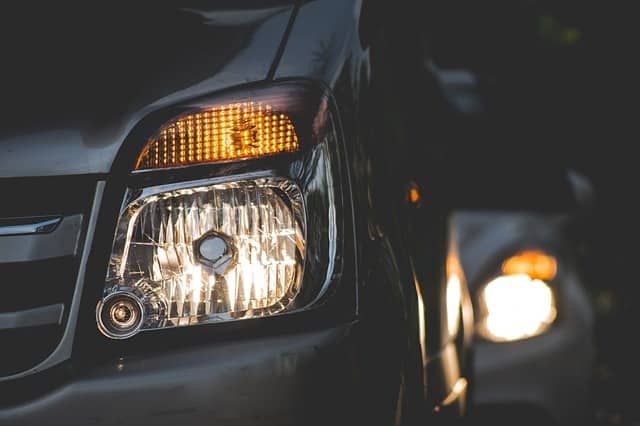
When your new LED bulb is in DRL mode, it may appear to rapidly switch on and off at a frequency your eye can see — that's the flicker. It happens because modern car electrical systems were built around the electrical behavior of halogen bulbs, and aftermarket LEDs don't match that behavior in three specific ways.
Cause 1: Wattage Mismatch
A halogen high-beam filament typically draws around 55 watts — that's the spec for H1, H7, and the high-beam filament in an H15. Some variants run higher: H4 bulbs are rated at 60W high / 55W low, and HB3 (9005) bulbs pull 65W. An LED H15 in DRL mode, by contrast, draws only about 5 to 15 watts.
That huge gap in power consumption makes the car's computer assume the bulb is out or disconnected — which it signals by flickering the light and raising a dashboard warning.
Cause 2: PWM Dimming
Most modern vehicles don't actually run the DRL at a lower voltage — they dim it using pulse-width modulation (PWM). The body control module rapidly switches the 12V supply on and off at a low duty cycle. A halogen filament smooths that pulsing thermally: it stays hot between pulses, so the light appears steady.
An LED has no thermal mass to smooth the signal — it responds instantly to each on/off cycle. Your eye perceives those pulses as flicker. This is the most common root cause of LED DRL flicker on post-2015 vehicles.
Cause 3: CANBus Communication Failure
Many modern cars monitor each bulb over a CANBus control network. Because the LED's power draw doesn't match the halogen the system expects, the CANBus may not recognize the new bulb correctly, triggering error codes. Along with flickering, you may see dashboard warnings, malfunctions, or radio interference.
Also read: When Should Dipped Headlights Be Used?
How to Fix Flickering Daytime Running Lights
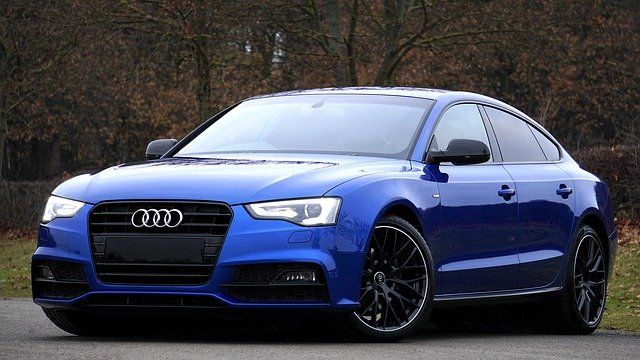
Three fixes solve almost every aftermarket LED DRL flicker. The right one depends on which cause is driving your specific issue.
| Fix | Best For | Difficulty | How It Works |
|---|---|---|---|
| CANBus decoder adapter | Dashboard errors + flicker from CANBus miscommunication | Easy (plug-and-play) | Translates the LED's signal so the control system sees a halogen-equivalent load |
| Relay harness | PWM-related flicker on post-2015 vehicles | Moderate (wiring) | Delivers a steady 12V DC from the battery, bypassing the car's PWM DRL signal |
| Load resistor | Cheap fix for 'bulb out' warnings | Easy to moderate | Wired in parallel with the LED; draws extra current as heat so the CANBus sees a halogen-equivalent draw |
Fix 1: Install a CANBus Decoder Adapter
A CANBus adapter plugs inline between the bulb and its harness and translates the LED's electrical signature into something the control system reads as a halogen. That eliminates the miscommunication behind most flicker and 'bulb out' warnings. Installation usually takes minutes — there's no wiring to the battery.
Good first option if you're also seeing dashboard errors on your LED DRL lights.
Fix 2: Wire In a Relay Harness
A relay harness (sometimes sold as an 'anti-flicker' harness) taps a direct feed from the battery to drive the LED, with a relay triggered by the original DRL wire switching that feed on and off. The result is a steady 12V DC power supply and voltage — no PWM pulsing for the LED to render as flicker. You connect it to the bulb sockets and to a battery-positive feed.
This is the most reliable fix for modern vehicles where PWM is the primary cause.
Fix 3: Add a Load Resistor
A load resistor is wired in parallel with the LED. It draws extra current and dissipates it as heat, making the car's CANBus see a power draw similar to the original halogen. That stops the 'bulb out' warning and the flicker it causes.
It's the cheapest option, but there's a catch: the resistors get very hot in use, so they need to be mounted to a metal surface away from wiring, plastics, and anything meltable.
The Easy Route: Buy a Pre-Built Kit
If wiring isn't your thing, buy a high-quality H15 LED DRL conversion kit with the decoders and resistors already integrated. These are compatible with most cars, but check fitment with the retailer before buying to avoid returns.
Before You Buy: A Quick Pre-Purchase Checklist
- Confirm the bulb size matches your vehicle (H15 is most common for dual DRL / high-beam setups).
- Check whether the kit has a built-in CANBus decoder or load resistor.
- Verify the rated wattage is appropriate for your vehicle's electrical system.
- Make sure the seller offers a return policy in case of compatibility issues.
A Note on Road-Legality
Aftermarket LED conversions aren't road-legal everywhere. In several EU countries and some US states, LED bulbs installed in headlight housings designed for halogens can fail inspection because the beam pattern may cause glare for oncoming drivers. Verify that your LED DRL conversion kit is road-legal in your region before installing it.
Also check out my other article about flickering signal lights.
Key Takeaways
- LED DRLs flicker because they draw far less power than halogens (5–15W vs. 55W+) and respond instantly to the PWM dimming signal modern cars use — halogens smooth those pulses out thermally.
- The mismatch triggers CANBus 'bulb out' warnings and can cause dashboard errors or radio interference.
- Three fixes solve almost every case: a CANBus decoder (for communication errors), a relay harness (for PWM-driven flicker), or a load resistor (cheap fix for the 'bulb out' warning).
- The easiest path is a conversion kit with these components built in — just verify compatibility and road-legality first.
Tried one of these fixes?