
How Many Dimmer Switches Can Be On One Circuit?
Wire two standard 3-way dimmers to the same fixture and they'll clash — each chopping the AC on its own timing, producing flicker, buzzing, or bulb damage. That's exactly why a master/companion pair exists.
 Eugen
EugenEugen Nikolajev
Creator of LED Lighting Info
Hi, I am Eugen. I was always one of those kids who had all sorts of weird lighting gadgets for every occasion.
Now, I want to share my knowledge and experience about lighting with you on LED Lighting Info.
Read my editorial standards
Key Takeaways
On a whole-home lighting circuit you can install as many dimmers as you wish — except where they would control the same lights. That's still possible, but it requires specialist master/companion dimmers or a smart dimmer.
Can I install a dimmer switch in every room — and what happens when two dimmers share the same circuit loop?
That's really the core question. The short answer: across a whole home you can install as many dimmers as you like, one per set of lights, with no interference between rooms.
Where you run into trouble is when you try to control the same set of lights from two locations — that takes a purpose-built master/companion pair or a smart system.
Here's what I'll cover:
- Maximum Number Of Dimmer Switches Per Circuit
- Can You Have Two Dimmer Switches For A 3-Way Circuit?
- Companion Dimmers And Other Solutions
- A Few Common Gotchas Before You Buy
Maximum Number Of Dimmer Switches Per Circuit
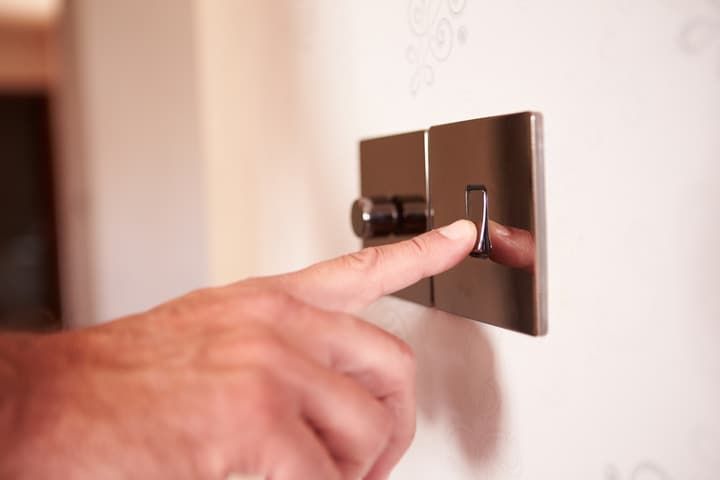
If you want to install dimmer switches in every room of your home, you can. There's no electrical-code limit on the number of dimmer switches on a home lighting circuit — as long as each dimmer's load is within its rating and the branch circuit isn't overloaded.
Here's why dimmers don't interfere with each other across a home:
- A dimmer switch uses a technique called phase-cutting. Inside the dimmer, a semiconductor (typically a TRIAC) chops out part of every AC half-cycle — either the leading edge or the trailing edge.
- The peak voltage of the wave stays the same, but because the bulb only receives part of each cycle, the effective (RMS) voltage delivered to the bulb is reduced.
- The bulb receives less power and shines less brightly. This happens many times per second, far too quickly to see.
- All of this only affects the local circuit loop the dimmer is on — not the rest of the home.
A home has a central lighting circuit linked to the lighting circuit breaker, but each room (or each set of lights) sits on its own loop running off that main circuit. That's why two dimmers in different rooms never interfere with each other — they're on different loops, and a dimmer only chops the AC for the loop it sits on.
Each dimmer has its own maximum wattage rating. As long as the lights on the same loop don't exceed that, you won't have an issue. If they do, the dimmer won't work properly, and you might flip the circuit breaker for the whole lighting circuit. The fix is either lower-wattage bulbs or a higher-rated dimmer.
Heads up: when you gang several dimmers side-by-side in a multi-gang box, most manufacturers require to derate each dimmer's maximum load — sometimes by 25–50% — because the dimmers run hotter when they can't dissipate heat sideways. The exact derating table is on the dimmer's spec sheet.
Can You Have Two Dimmer Switches For A 3-Way Circuit?
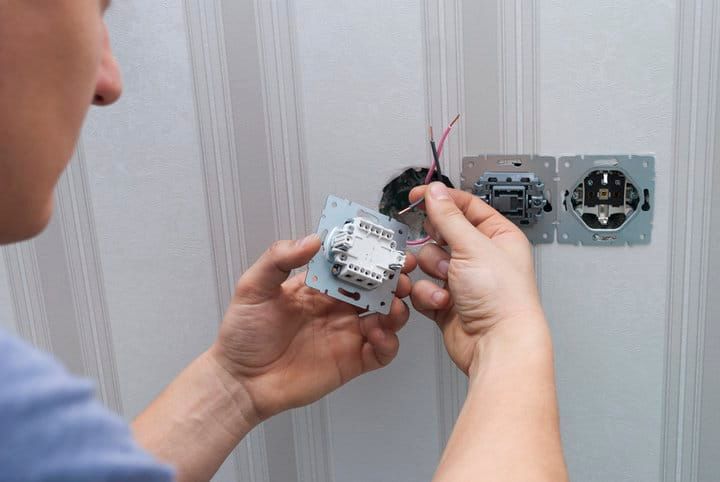
A 3-way circuit lets two switch locations control the same set of lights — common at the top and bottom of a staircase, at both ends of a long hallway, or at separate entrances of a large living room. (4-way circuits add a third location in the middle, and the same companion or smart solutions below apply to those too.)
Here's the part that's commonly misunderstood: in a 3-way circuit, the two switches don't connect directly to each other. Each 3-way switch has a "common" terminal and two "traveler" terminals (plus ground). Power goes to the common of the first switch; the second switch's common goes to the load (the light). The two switches are linked through a pair of traveler wires that run between their traveler terminals.
A standard 3-way dimmer is designed to be paired with a regular 3-way toggle switch at the other location, not with a second dimmer. The dimmer goes in one box and the toggle goes in the other; either one can turn the lights on or off, but only the dimmer adjusts brightness.
If you wire two standard 3-way dimmers into the same circuit, they aren't designed to coordinate. Each one tries to chop the AC waveform on its own timing reference, and the result is flicker, buzzing, dimmer failure, or damage to the bulbs. They'll clash, meaning that as one tries to turn the current on, the other could turn it off. That's why two-dimmer control of the same fixture requires a purpose-built master + companion pair (covered in the next section).
Important: two 3-way dimmers in different rooms (controlling different lights) are completely fine. The problem only occurs when they're competing on the same loop.
Companion Dimmers And Other Solutions
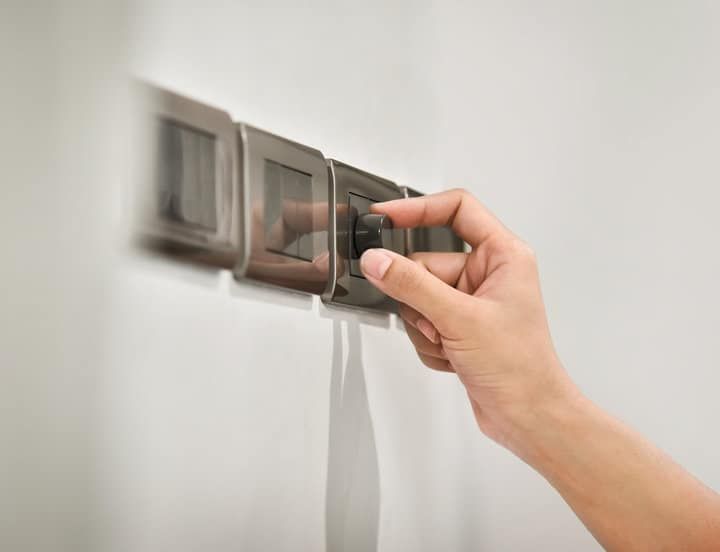
If you have a 3-way circuit in your home that you want controlled by two separate dimmers, there are two main options.
Option 1: Master + companion dimmer set
These are dimmers built specifically to work together. Install one master dimmer and one or more companion dimmers; the companions communicate with the master so you can dim the lights from any location.
Traditional hardwired companion dimmers don't communicate wirelessly. They use a dedicated low-voltage signal wire that's physically run between the master and each companion (Lutron, for example, uses the "blue" terminal on each device). When you press a companion, it sends a digital signal down that wire and the master adjusts the load.
Limits depend on the product line. Lutron's Maestro LED+ (MACL-153M) (Amazon), for example, supports control from up to 10 locations — one master dimmer plus up to nine MA-R companion dimmers — provided the total wire run between them is no more than 250 ft. Other product lines and other manufacturers have different limits, so always check the spec sheet for the dimmer you are buying.
Option 2: Smart dimmers or smart bulbs
The other route is to replace the switch with a smart dimmer, or replace the bulbs with smart bulbs (Amazon). Smart light bulbs can be dimmed from a phone or voice assistant, and smart dimmer switches do the same job for regular bulbs.
Smart systems work differently from hardwired companions: smart dimmers and smart bulbs typically communicate wirelessly — over Wi-Fi, Zigbee, Z-Wave, or proprietary RF like Lutron Clear Connect — to a hub or app, rather than over a hardwired signal wire. Smart bulbs are the most expensive option, but they unlock the most flexibility: motion sensors, schedules, scenes, and color control.
Quick comparison
| Solution | Special Wiring | Dim From All Locations | Cost | Best For |
|---|---|---|---|---|
| Standard 3-way dimmer + 3-way toggle | No (uses existing 3-way wiring) | No — only at the dimmer | $ | Basic two-location setups where dimming at one end is enough |
| Master + companion dimmer pair | Signal wire between boxes (often reuses a traveler) | Yes | $$ | Hardwired multi-location dimming, no app needed |
| Smart dimmer switch | Often requires a neutral wire in the box | Yes (switch + app + voice) | $$ | Adding automation while keeping existing bulbs |
| Smart bulbs | None (replace bulbs only) | Yes (app, voice, sensors) | $$$ | Maximum flexibility, scenes, color control |
A Few Common Gotchas Before You Buy
These four issues account for most of the "new dimmer doesn't work right" problems you see, and none of them are obvious until you hit them.
LED bulb compatibility
Many older dimmers were designed for incandescent and halogen loads. If you install LED bulbs on a non-LED-rated dimmer, you can get humming, flickering, drop-out at the low end of the dial, or premature dimmer failure. For LEDs look for a dimmer explicitly labeled "LED+" or "LED-compatible," and ideally check the manufacturer's compatibility list for the specific bulb model.
Minimum load requirements
A lot of dimmers — especially older models — need a minimum wattage to function correctly, often 25–40 W. With low-wattage LED bulbs (a 9 W LED replacing a 60 W incandescent, say), fall below that minimum and end up with a flickery dial or a dim glow even when the dimmer is off. The fix is either a dimmer rated for low-wattage LED loads or adding a few more bulbs to the same loop.
Neutral wire for smart dimmers
Most smart dimmers need a neutral wire in the switch box, and many older homes don't have one at the switch location. Before you buy a smart dimmer, shut off the breaker, pull the wall plate, and check whether there's a bundle of white (neutral) wires connected together inside the box. If not, either pick one of the few "no-neutral-required" smart dimmers or plan a wiring upgrade.
Get an electrician for tricky wiring
Single-pole dimmer swaps are usually within reach for a confident DIYer. 3-way and companion installs are a different story — there are travelers, signal wires, and box-by-box pairings that are easy to get wrong. If you're not 100% sure you can identify common, traveler, neutral, and ground correctly, call a licensed electrician. Working a circuit dead is non-negotiable, and the cost of a service call is small compared to the cost of a fault.
Final Words
Stripped to the essentials, here's the decision path:
- Different rooms / different lights → install as many regular dimmers as you want, no issue.
- Same lights, single switch location → a single dimmer is all you need.
- Same lights, two switch locations (3-way) → a master + companion dimmer pair, or a smart dimmer system.
- Same lights, three or more switch locations (4-way) → master + multiple companions (check the product line's limits) or a smart system.
- LED bulbs anywhere in the mix → buy an LED-rated dimmer, check minimum-load specs, and verify bulb compatibility on the manufacturer's list.
FAQ
Can I install a dimmer switch in every room of my house?
Yes. There's no electrical-code limit on the number of dimmers in a home lighting circuit, as long as each dimmer's load stays within its rating and the branch circuit isn't overloaded. The one thing to watch for is derating when multiple dimmers are ganged together in a multi-gang box — most manufacturers reduce each dimmer's rated load by 25–50% in that case.
Why do my LED bulbs flicker on a dimmer?
Almost always one of three things: the dimmer isn't LED-rated (it was built for incandescent loads), the total LED wattage is below the dimmer's minimum load, or the specific bulb isn't on the dimmer's compatibility list. Switching to an LED+ dimmer and checking the manufacturer's bulb compatibility chart usually clears it up.
Can I put two regular 3-way dimmers in the same circuit?
No. Two standard 3-way dimmers aren't designed to coordinate — each chops the AC waveform on its own timing, and the result is flicker, buzzing, or damage to the dimmer or bulbs. For two-location dimming use a purpose-built master + companion pair, or a smart dimmer system.
Do smart dimmers need a neutral wire?
Most do. A handful of "no-neutral" smart dimmers exist, but the majority require a neutral wire in the switch box. Before buying, turn off the breaker and check the box for a bundled set of white wires — if there isn't one, either choose a no-neutral model or run a neutral.
How do companion dimmers communicate with the master?
Traditional hardwired companions don't use radio at all — they communicate over a dedicated low-voltage signal wire run between the master and each companion in the wall (Lutron uses the "blue" terminal for this). Wireless smart dimmers are different: they talk to a hub or app over Wi-Fi, Zigbee, Z-Wave, or proprietary RF.