Can You Use LED Headlights In Reflector Housing?
Swap an LED into a reflector housing without changing the bowl and you'll likely blind oncoming drivers — not because the LED is too bright, but because it emits light in the wrong direction entirely.
 Eugen
EugenEugen Nikolajev
Creator of LED Lighting Info
Hi, I am Eugen. I was always one of those kids who had all sorts of weird lighting gadgets for every occasion.
Now, I want to share my knowledge and experience about lighting with you on LED Lighting Info.
Read my editorial standards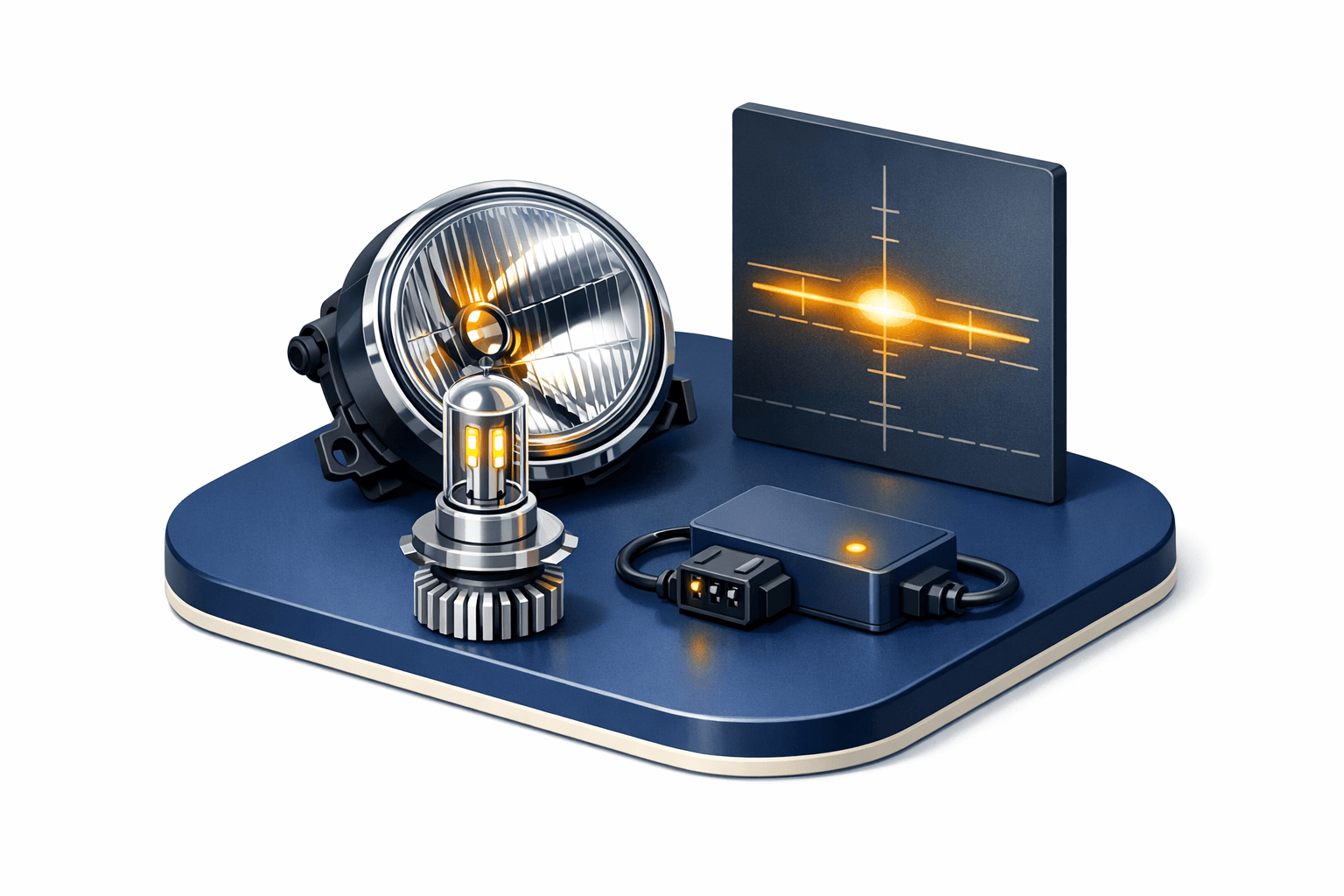
Key Takeaways
In theory, LED lights are compatible with reflector headlights. However, if a vehicle currently uses halogens, it's not a simple switchover. LEDs require additional electronics, heat dissipation, a current-regulating driver, and — unless you buy a vehicle-specific bulb engineered with matched optics — a purpose-built reflector bowl.
Upgrading to LED headlights is tempting, but swapping LEDs into a reflector housing isn't as simple as changing a household bulb — here's what you need to know.
In this article, I'll:
- Clarify the difference between reflector and projector headlights,
- Explain which bulb types reflector housings use,
- Explore the difficulties of using LEDs in reflector headlights,
- Compare LEDs and HIDs to determine which is better,
- Cover retrofit best practices and road legality.
Projector vs Reflector Headlights – What Are The Differences?
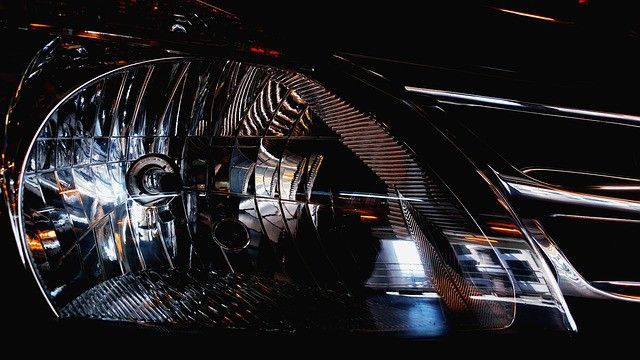
First, you need to know what kind of headlights your vehicle currently has. There are two possibilities: projector headlights or reflector headlights.
The difference between the two is surprisingly simple: a lens.
Reflector headlights are the original automotive headlight design. Electric headlights first appeared on the 1898 Columbia Electric Car as an option, became standard equipment around 1908, and the standardized sealed-beam reflector unit was mandated for all US vehicles in 1940.
Reflector headlights have two main components: a light source (bulb) and a reflector bowl within the headlight housing.
As the name suggests, the reflector bowl is a hollow hemisphere. The inside is painted with reflective chrome paint and precisely shaped to direct light forward.
The bulb sits in the center of the bowl. When it's switched on, beams of light hit the reflective surface and are bounced out in front of the vehicle onto the road.
Reflectors produce a wide beam pattern that covers a large area, but the trade-off is that the light is less intense and less focused, so there's more light waste.
A projector headlight adds a third component: an ellipsoidal lens (sometimes called a fisheye or fishbowl lens). They also typically include a cut-off shield at the focal point to prevent dazzling other road users.
The bowl and light source operate just as they do in a reflector headlight, but the light passes through the lens before leaving the assembly. The lens bends, spreads, and magnifies the beam, directing it onto the road surface instead of into the eyes of oncoming drivers.
The result is a more intense, more focused beam with less light waste. Projectors are a newer design, first appearing on a 1981 Audi concept car and debuting in production on the 1986 BMW 7 Series. They remained a premium feature through the 1990s and only became common on mainstream cars in the 2000s.
You can read my other article about LEDs in projector headlights.
What Bulb Type Does Your Reflector Headlight Use?
Reflector headlights use many different bulb standards depending on the vehicle — common types include H1, H4, H7, H11, 9005, and 9006. H7 is one of the most common low-beam bulbs, but there is no universal answer. Always check your owner's manual or an online bulb-fitment guide before buying.
H7 bulbs have a PX26d base with two flat terminals and are commonly used for low beams, though some vehicles use them for high beams as well. H1 is another common choice, often paired with H7 in vehicles that use separate bulbs for low and high beams. You can read about the differences between H1 and H7 bulbs here.
Dual-filament bulbs like H4 and H13 pack both low- and high-beam filaments into one unit — these are common in vehicles with a single bulb per headlight assembly. The base geometry isn't about making swaps easier; it's about positioning the filament precisely where the reflector optics expect it to be.
Are LED Lights Safe To Use In Reflector Housing?
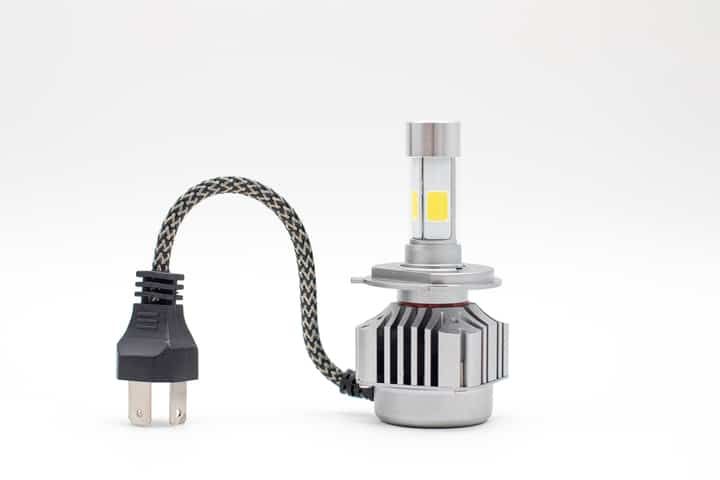
Halogens are dated technology, so LEDs are a tempting alternative. Can you simply drop one into a reflector housing? For most vehicles, not without trade-offs.
LEDs can be used in reflector headlights, but if you're swapping bulbs into a housing originally designed for halogens, you generally also need to change the reflector bowl. Fail to do so and you risk blinding other drivers.
No two reflectors are the same. Each reflector headlight is engineered around the exact specifications of the halogen bulb it was designed to use — filament position, size, and emission pattern. Replacing that halogen with an LED throws the optics off balance. Even small changes alter where the light hits the bowl and where it ends up projecting, so you wind up with light in places it was never intended to go.
The core issue: LEDs are directional while halogens are omnidirectional. A halogen bulb emits light in all directions like a campfire, illuminating the entire reflector bowl. An LED chip emits light in a narrow cone — like a flashlight — leaving parts of the reflector dark and others overlit. This has two consequences:
- Light is concentrated on the reflector's sides, creating blank spots, hollow zones, and hot spots in the beam pattern.
- The upper portion of the reflector is under-illuminated, so throw distance drops and stray light scatters above the cut-off line, glaring oncoming drivers.
This is a real safety hazard, so it's essential to replace both the light source and the reflector bowl when upgrading — unless you buy vehicle-specific LEDs engineered with matched optics. These purpose-built bulbs position their emitters to mimic the halogen filament the reflector was built around, which is the exception that makes plug-and-play retrofits viable without bowl replacement.
Which Is Better? HID or LED In Reflector Housing
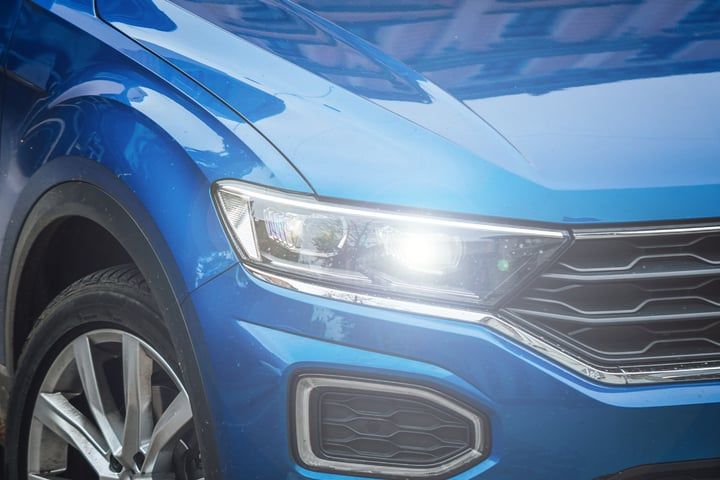
Before committing to LEDs, it's worth considering whether HIDs are a simpler alternative.
High-intensity discharge (HID or xenon) bulbs produce light by creating an electric arc between two tungsten electrodes inside a sealed capsule of gas.
On paper, HIDs are a big step up from halogens: they produce roughly 2–3 times as much light (around 3,000 lumens versus 1,500) while drawing about 35W instead of 55W.
But HIDs suffer from the same beam-pattern problems as plug-and-play LEDs. Putting an HID bulb inside a reflector designed for halogens causes an immense amount of scattering — it's a level playing field between LEDs and HIDs on this front.
Where they differ most is start-up time. HIDs and LEDs differ because of how they generate light: HIDs need a pulse of high voltage to strike the arc, and the gas needs time to reach full brightness — typically several seconds (often 5–10). LEDs reach full brightness instantaneously.
Here's how they compare directly:
| Feature | HID (Xenon) | LED |
|---|---|---|
| Lumens vs halogen | ~2–3× brighter | ~2–3× brighter |
| Power draw | ~35W | ~25–40W |
| Warm-up time | 5–10 seconds | Instant |
| Glare in halogen reflector | High | High |
| Lifespan | ~2,000–3,000 hrs | ~30,000+ hrs |
| Beam-pattern fix | Bowl replacement | Bowl replacement or vehicle-specific bulb |
In emergency scenarios, those start-up seconds can matter. Combined with far longer lifespan and the availability of vehicle-specific bulbs with matched optics, LEDs are the better retrofit option for reflector headlights — provided you address the beam-pattern issue.
Also read: Do LED Lights Need Beam Deflectors?
Can You Retrofit LED Into Reflector Headlights?
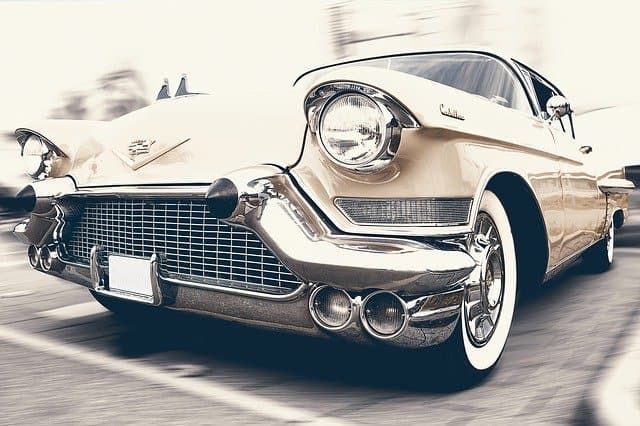
Retrofitting LEDs into a reflector headlight means solving several problems at once. You may find it easier to purchase an entire LED headlight assembly — but these aren't available for every vehicle and tend to be expensive.
Here's a practical checklist for a reflector LED retrofit:
- Replace the reflector bowl, or buy a vehicle-specific LED designed to match your OEM halogen's filament position.
- Make sure there's clearance behind the headlight for the heat sink or cooling fan.
- Install an LED driver to regulate current (most plug-and-play bulbs have one built in).
- Add a CANbus adapter or load resistor if your vehicle's bulb-monitoring system throws an error.
- Choose a color temperature in the 4,000–5,000K range for best road illumination.
- Perform a wall test after fitment to check beam pattern and cutoff.
- Verify road legality in your region before driving on public roads.
Heat and Fitment
LEDs need heat dissipation — usually a passive heat sink or a small cooling fan behind the bulb. If there isn't enough space behind the headlight assembly to accommodate this, the bulb won't physically fit. Pick a compact design if clearance is tight.
Electronics and Current Regulation
Both halogen and LED automotive bulbs run off the vehicle's nominal 12V system. What LEDs need is a driver — a constant-current regulator — to protect them from the current swings in a car's electrical system. Without one, the bulb will overheat and fail. Most plug-and-play automotive LEDs have this driver integrated into the bulb assembly, so you don't have to wire one in separately.
CANbus Error Lights
Many modern vehicles use a CANbus bulb-monitoring system that expects the current draw of a halogen bulb. An LED draws less, so the system flags it as a blown bulb — usually with a dashboard warning, sometimes with rapid flashing or dim output. The fix isn't a full rewire. Most drivers resolve this with a CANbus-compatible LED bulb or a plug-in load resistor (sometimes called a "decoder") that mimics halogen current draw.
Color Temperature
Halogens are warm white (around 3,200K). LEDs are sold in a wide range, typically 4,000K (neutral white) up to 6,500K and beyond (blue-white). Counter-intuitively, very high Kelvin LEDs (6,000K+) often have lower useful road illumination despite appearing brighter — more of the output shifts into blue wavelengths that scatter in rain and fog. A 4,000–5,000K LED usually gives the best practical visibility.
The Wall Test
Before taking a retrofit onto public roads, park about two car lengths back from a flat wall and check the projected beam. You should see a crisp horizontal cutoff line, no large bright hot spots, and no stray light scattering above the cutoff. If the pattern looks messy, the optics aren't matched — either the bowl or the bulb needs to change.
Where To Buy
Look for plug-and-play LED kits that include a built-in driver, a CANbus-compatible design, and — critically — bulbs engineered for your specific vehicle. Lasfit is one affiliate partner whose site lets you filter by make and model, which matters because the LED has to match your reflector geometry to produce an acceptable beam.
Sticking with a plug-and-play bulb also means you don't have to worry about voiding your car's warranty.
Are LED Reflector Headlights Road Legal?
This is arguably the most important caveat in the entire retrofit conversation, and it varies sharply by jurisdiction:
- In the EU and UK (ECE regulations), fitting non-type-approved LED bulbs into a housing originally type-approved for halogens is illegal for road use and will fail an MOT (UK) or TÜV (Germany) inspection.
- In the US (FMVSS 108), headlamp assemblies must meet federal photometric standards. Many consumer-grade plug-and-play LED bulbs are marketed strictly "for off-road use only" because they don't meet this standard.
- In Australia, Canada, and most of Asia, rules are closer to the EU model, with type-approval tied to the headlamp assembly as a whole.
Translation: many of the LED bulbs you can buy online are not legal for public-road use in the housing they'll be fitted to. Always check your local regulations before driving on a retrofit — legality, not just beam quality, is the final gate.
Final Words
No matter how closely LEDs try to replicate halogen bulbs, the beam pattern will never be identical. Upgrading your reflector headlights to LEDs can be worth the effort — but only when done with matched optics, proper heat and current management, a wall-test check, and attention to local legality.
Have you tried replacing your reflector headlight bulbs with LEDs? Did you run into any issues?