
Why Are My LED Lights Not Bright? Diagnostic Quiz + Fixing Guide
Your dimmer powers the lights at full brightness, but moving the slider changes nothing — a classic sign the switch was built for incandescents, not the small electronic load of an LED.
 Eugen
EugenEugen Nikolajev
Creator of LED Lighting Info
Hi, I am Eugen. I was always one of those kids who had all sorts of weird lighting gadgets for every occasion.
Now, I want to share my knowledge and experience about lighting with you on LED Lighting Info.
Read my editorial standards
Key Takeaways
LED bulbs typically dim because of failed individual diodes, weak internal components like capacitors or drivers, overheating in poorly ventilated fixtures, loose wiring, or incompatible dimmer switches. Heavy-load appliances on the same circuit can also cause brief dimming when they start up.
Why Are My LED Lights Dim? Symptom Diagnostic
Answer a few questions about how your LED is dimming and you'll get the most likely cause plus a step-by-step fix.
10 questions — takes about a minute
Answers are anonymous and may be used to improve content.
If your LED bulbs look dimmer than expected — whether brand new out of the box or after months of use — this guide walks you through the most likely causes and how to fix them safely.
This guide covers:
- The common causes when LED lights dim
- Step-by-step troubleshooting to make them brighter
- Why brand-new LEDs may appear dim
- When to stop and call a licensed electrician
What Causes LED Lights To Dim?
There are several potential reasons your LED lights could dim. Each gets its own section below:
- Individual faulty LED diodes
- Loose or corroded wiring (in the fixture or panel)
- External wiring failure between your panel and the local transformer
- Inrush current from large appliances starting up
- Lumen depreciation (normal wear over time)
- Failed capacitors
- Overheating in a poorly ventilated fixture
- Failed drivers or external power supplies
I'll cover each below — but first, here's what happened with my own bulbs.
Personal Experience: One LED Dimmer Than The Other In The Same Fixture
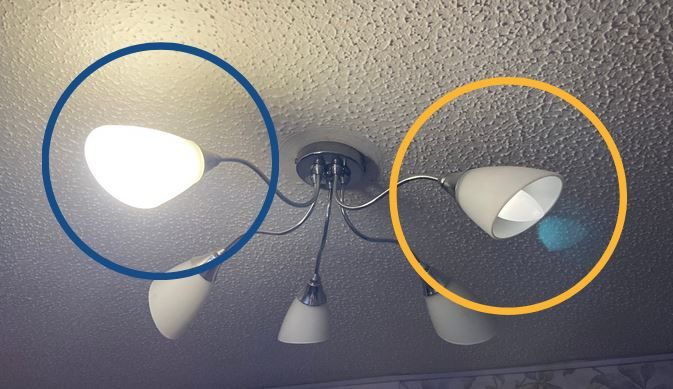
These two bulbs in the same fixture started out identically bright. One ended up significantly dimmer than the other, so I opened it up to investigate.
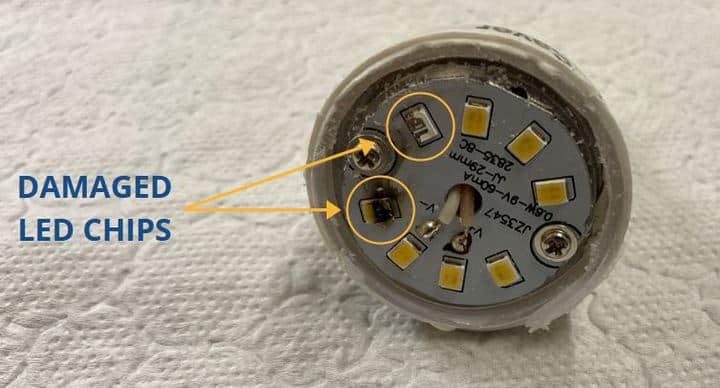
Two of the eight LED chips were clearly burnt out, and a third looked compromised. I checked the driver and capacitors on the mother-plate visually — all of them looked fine.
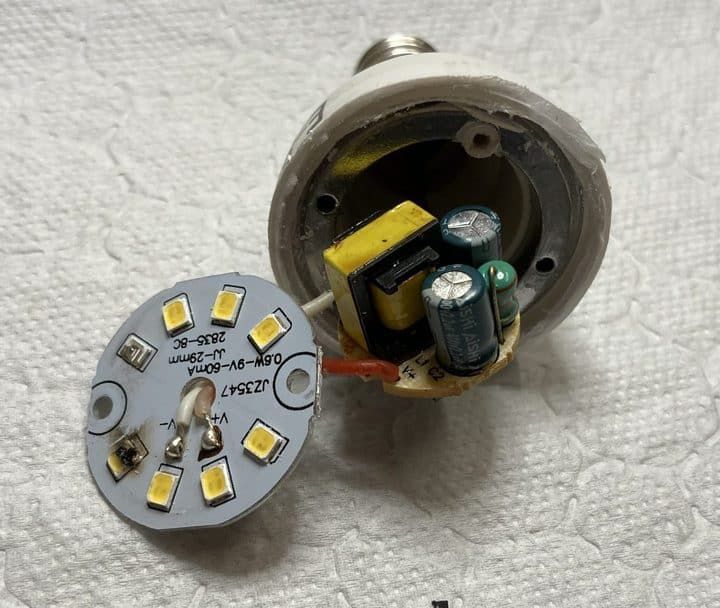
With the chips wired in series, losing two of eight was enough to drag the bulb's whole output down. I replaced the bulb rather than try to short out the dead diodes — for the safety reasons I cover further down. Lesson: a single dead chip in a series array can take a noticeable bite out of total brightness.
Why Could An LED Light Suddenly Dim?
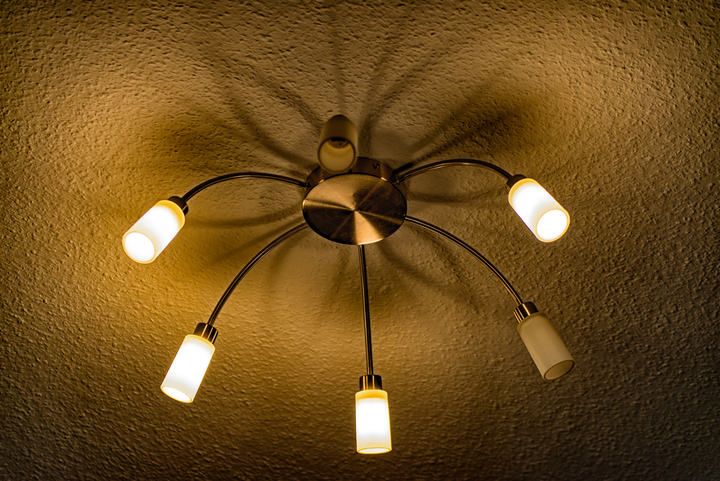
When an LED suddenly drops in brightness, it usually points to a new fault: a diode has failed, a wire has worked loose in the panel, or the utility power coming into the house has been compromised. The diode case is covered above — here are the other two.
Loose Or Corroded Neutral Wire
A loose or corroded neutral wire in the electrical panel is extremely serious — get it fixed immediately. In a split-phase home system, a failing neutral causes the two 120V legs to go out of balance: one leg can spike to 160V or higher while the other drops well below 100V, which can instantly damage electronics and motors throughout the house. The loose connection itself can also arc and overheat, creating a real fire risk.
⚠️ Safety: This is an open or high-resistance fault, not a short circuit — but the resulting overvoltage and arcing can be equally dangerous. Do not attempt to fix a panel-side neutral yourself. Cut power at the main breaker and call a licensed electrician.
Brownout From Utility Wiring
If your house lights are dimming after a big storm, check with your neighbors. If they're seeing the same thing, the problem is likely with the service infrastructure — the cable running from your panel to the meter and on to the transformer. This is a brownout, as opposed to a complete blackout. Call your power company — they will repair the loose or disconnected wiring at no cost to you.
LED Light Starts Dim Then Gets Brighter (Inrush Current)
If your LED briefly dims and then recovers within a second or two, you're almost certainly seeing inrush current from a large appliance starting up.
Motors in appliances like washers, dryers, fridges and A/C units draw 6–8× their running current at startup. That momentary spike causes a small voltage dip on the shared circuit, and any lights on that circuit register the dip as a brief flicker or dim before voltage stabilizes within a second or two.
Modern LEDs with quality drivers tend to ride through these dips better than older incandescents or cheap LEDs. If the dimming is frequent and noticeable, the fix is to move the affected fixture onto a different circuit from the high-load appliance — not to replace the bulb.
Why Do LED Lights Get Dimmer Over Time?
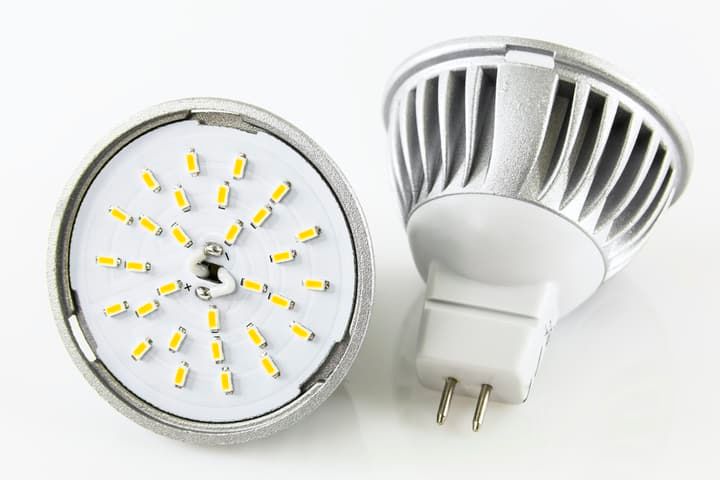
An LED bulb gradually dims as it ages — diodes degrade, capacitors weaken, drivers wear out. Overheating accelerates all of these failure modes.
Lumen Depreciation (L70 / L50)
A natural cause for LEDs losing brightness is simply lumen depreciation. L70 — the point at which a bulb emits 70% of its original brightness — is the industry-standard benchmark used to rate LED lifespan (e.g., a label might read "50,000 hours to L70"). It was chosen because research found that most users don't notice the slow loss of light until output drops past 70% of the original. It is not a hard failure point: the bulb still works, it's just noticeably dimmer. L50 (50% of original output) is sometimes cited for indicator-style applications where absolute brightness matters less.
A bulb at L70 can keep running indefinitely, but this is the stage where most people notice the drop and choose to replace it. If your bulb is several years old and just looks tired, this is the most likely culprit. (For more, see how long LED bulbs last.)
Failed Capacitor
A failing capacitor on the bulb's driver board causes erratic or reduced output. To check, open the bulb (with the power off) and look for any capacitor that's swollen, bulged, or leaking. If you find one, the bulb is at end of life — replace it rather than attempt a repair.
Overheating
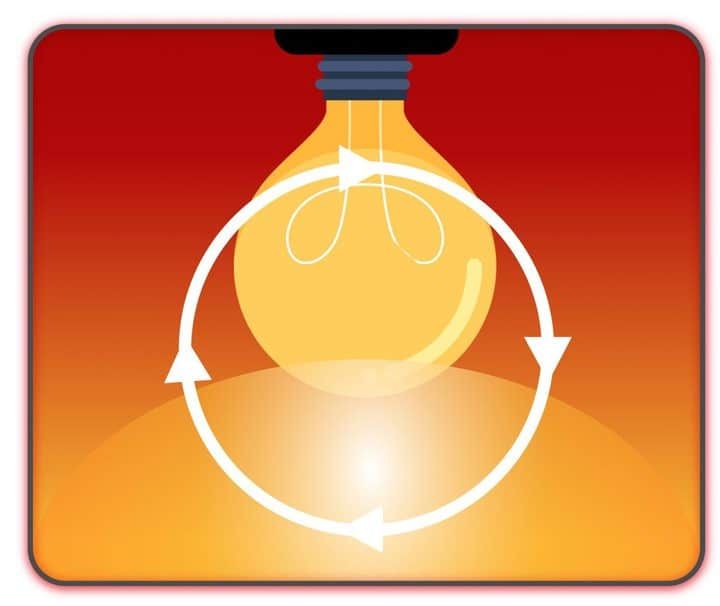
A tight, non-ventilated fixture that traps heat will rapidly shorten an LED's life.
LEDs perform best in cool ambient environments — most consumer bulbs are rated for ambient temperatures from roughly -20°C up to 40°C (104°F). Performance starts dropping above that: at around 49°C (120°F) ambient, light output can fall to about 90% of rated, and a 10°C rise in the LED's internal junction temperature can roughly halve its lifespan. A fixture with poor airflow traps this heat and accelerates dimming. If you're using LEDs in a fully enclosed fixture, look for bulbs explicitly marked enclosed-rated.
Driver Or Power Supply Failure
For a screw-in bulb, this means the internal driver has stopped properly regulating voltage to the LED chips. For LED strips powered by an external plug, it usually means the plug-in power supply itself is failing. In either case, the fix is replacement — drivers are not user-serviceable on consumer bulbs.
How To Fix Dim LED Lights
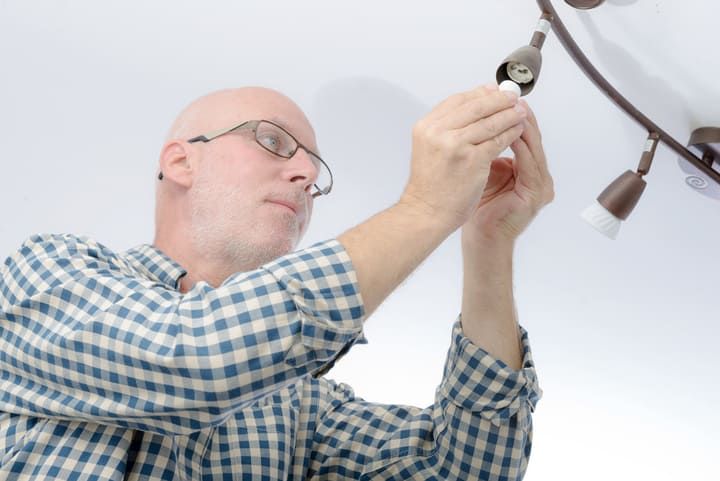
Work through these steps in order — each one rules out a common cause before you move on:
- Rule out external issues. Has there been a recent storm? Are your neighbors' lights also dim? If yes, call your power company — it's a brownout, not your fixture.
- Check for inrush current. Does the dimming happen the moment a fridge, A/C or washer kicks on, then recover within a second? Move the fixture onto a different circuit from the high-load appliance.
- Test whether it affects all your fixtures. If everything in the house is dim, the problem is at the panel or service entrance — call an electrician immediately, especially if you suspect a loose neutral.
- Swap in a known-good bulb. If the new bulb is also dim, the issue is in the fixture wiring, not the bulb. Cut power at the breaker and look for a loose or corroded wire at the socket.
- If only one bulb is dim, replace it. A failed diode, dead capacitor, or weak driver is rarely worth repairing on a mass-market screw-in bulb — replacement is faster, safer, and cheaper.
- Inspect for overheating. If the fixture is enclosed and the bulb runs hot, check whether the bulb is rated for enclosed use. If it isn't, swap it for one that is.
A Note On Shorting Out Failed Diodes
Safety warning: Shorting a failed diode inside a mains-voltage (120V/240V) screw-in bulb is not recommended. It alters the current and voltage distribution across the remaining diodes and the driver, and because LEDs can fail as a short (rather than as an open circuit like an incandescent), the driver can superheat at currents too low to trip your breaker — a documented fire-risk scenario. This DIY fix is only appropriate for low-voltage setups with separate, user-serviceable drivers (e.g., 12V LED strips). For a mains bulb, replace it.
Even on a low-voltage strip, shorting a faulty diode puts extra current and voltage stress on the remaining diodes, so they'll fail faster too. Treat it as a temporary patch, not a long-term fix.
Why Is My New LED Light So Dim?
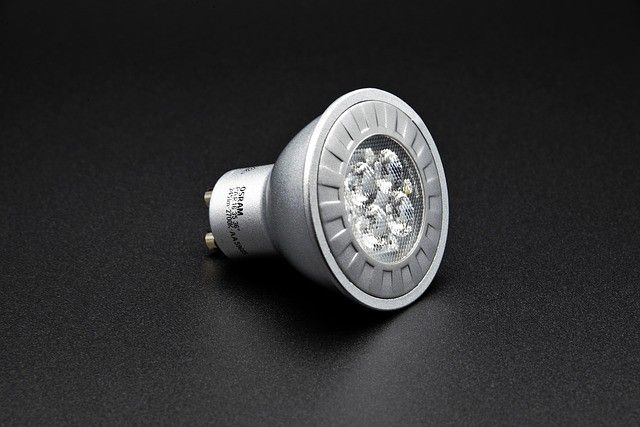
If a brand-new LED looks dimmer than expected, the bulb itself is usually fine — the issue is one of these five mismatches between the bulb and the rest of your setup.
Cause 1: You Bought A Low-Lumen Bulb
Look at the total lumen output on the packaging — this is what tells you how bright the bulb will be. As a rough guide, an old 60W incandescent produced around 800 lumens, and a 100W incandescent around 1,600 lumens. If the new LED is rated for fewer lumens than the bulb it replaced, of course it will look dimmer.
Lumens-per-watt (efficacy) is a useful efficiency metric, but it doesn't tell you brightness — a very efficient low-wattage bulb can still be dim. Pick lumens for brightness, then use watts and lm/W to compare energy use.
Cause 2: Wrong Color Temperature
Two bulbs with identical lumen ratings can look very different. A 2700K "warm white" bulb produces a yellow, cozy light that many people perceive as dimmer than a 5000K "daylight" bulb of the same lumen output, which reads as crisp and bright. If you replaced cool fluorescent tubes with warm-white LEDs of equal lumens, the new bulbs may simply look dimmer to your eye — try a 4000K (neutral) or 5000K (daylight) bulb if you want the same perceived brightness.
Cause 3: Incompatible Dimmer Switch
This is one of the most common reasons new LEDs underperform. Old dimmer switches were designed for incandescent loads — they use leading-edge (TRIAC) phase control and expect a high resistive load, which doesn't play well with the small electronic loads of LED bulbs.
Symptoms of an incompatible dimmer:
- The bulb won't go below 30–40% brightness
- Flickering at low dim levels
- Audible buzzing from the switch or the bulb
- Bulb stays permanently dim regardless of slider position
- Many older dimmers also require a minimum load (often 40–60W) that LED bulbs simply don't reach
The fix is to replace the dimmer with one designed for LEDs. In the US, look for switches labeled "CL" (CFL/LED) or trailing-edge (ELV) dimmers, and confirm your specific bulb is on the dimmer manufacturer's compatibility list. The bulb itself also needs to be marked dimmable — non-dimmable LEDs on any dimmer will misbehave.
| Dimmer Type | Designed For | Works With LEDs? |
|---|---|---|
| Leading-edge (TRIAC) | Incandescent, halogen | Often poorly — flicker, buzz, narrow dimming range |
| Trailing-edge (ELV) | Electronic / low-voltage loads | Good — smoother dimming, less buzz |
| CL / LED+ rated | Dimmable LEDs and CFLs | Best — designed specifically for low-load LED bulbs |
| 0–10V or DALI | Commercial / architectural LEDs | Excellent, but requires LED with matching control input |
Cause 4: Cheap Driver Or Low Power Factor
Bargain-basement LED bulbs often use low-quality constant-current drivers that deliver less current than rated. The box might claim 800 lumens, but real-world output can be 20–30% lower. There's no fix for this short of replacement — and it's a strong reason to favor bulbs from reputable brands with ENERGY STAR certification, which requires lab-verified lumen output.
Cause 5: Old Or Overloaded Household Wiring
In older homes, undersized or aging wiring can sag in voltage when the circuit is heavily loaded. The bulb gets less than its rated voltage and produces less light. If the dimming follows a load pattern — worse when more devices are on the circuit — have an electrician evaluate the wiring rather than buying more bulbs.
When To Stop And Call A Licensed Electrician
Stop DIY troubleshooting and call an electrician immediately if any of the following apply:
- You suspect a loose neutral wire (lights across the whole house dimming or brightening unevenly, especially when large appliances cycle)
- You smell burning, see scorch marks at outlets or switches, or hear arcing/buzzing from the panel
- Breakers are tripping repeatedly on the circuit serving the dim lights
- You don't feel confident working safely inside the electrical panel — there's no shame in this; panels carry lethal voltage even with the main breaker off
Final Words
Most dim-LED problems trace back to one of three issues: a failed diode or driver inside the bulb, an incompatible dimmer (or wrong color temperature) on a brand-new bulb, or overheating in a poorly ventilated fixture. Start with the simplest test — swap the bulb — before opening up the fixture, and never disturb wiring inside the electrical panel yourself.
If you're hitting other LED issues — strips dropping out, dimmer compatibility problems, or color shift over time — see our roundup of common problems with LED lights for more fixes.
FAQ
What does L70 mean for an LED bulb?
L70 is the industry-standard benchmark used to rate LED lifespan. It's the point at which the bulb emits 70% of its original brightness — chosen because most users start to notice the dimming around that level. It's not a failure point; the bulb still works, just at reduced output. A rating of '50,000 hours to L70' means the bulb is expected to keep producing at least 70% of its original lumens for 50,000 hours of use.
Can I just short out a dead diode to fix a dim LED bulb?
Not on a standard 120V or 240V screw-in bulb. Shorting a failed diode changes the load on the driver, and because LEDs can fail as a short, the driver can superheat at currents too low to trip your breaker — a documented fire-risk scenario. The technique is only appropriate on low-voltage setups (like 12V LED strips) with separate, user-serviceable drivers. For mains bulbs, replace them.
Why does my LED dim or flicker when the fridge or A/C kicks on?
That's inrush current. Motors in large appliances draw 6–8 times their running current at startup, which causes a brief voltage dip on the shared circuit. Lights register the dip as a flicker or momentary dim before voltage stabilizes within a second. If it's frequent enough to be annoying, move the fixture to a different circuit from the high-load appliance.
Why is my brand-new LED bulb dimmer than the one it replaced?
Most often it's one of three things: a lumen mismatch (the new bulb has a lower lumen rating than the old one), a color-temperature difference (warm 2700K LEDs read as dimmer than cool 5000K LEDs of the same lumens), or an incompatible dimmer switch. Check the lumen number on the box first — for a 60W incandescent replacement, you want around 800 lumens.
Is a loose neutral wire a short circuit?
No. A loose or lost neutral is an open or high-resistance fault, not a short. In a split-phase home system it causes the two 120V legs to imbalance — one can spike toward 160V while the other drops below 100V, damaging electronics on the higher leg. The loose connection itself can also arc and overheat. The mechanism is different from a short circuit, but the consequences (equipment damage and fire risk) are similarly serious. Call a licensed electrician.
What's the safe operating temperature range for an LED bulb?
Most consumer LED bulbs are rated for ambient temperatures between roughly -20°C and 40°C (104°F). Performance starts dropping above that — at about 49°C (120°F) ambient, output can fall to around 90% of rated, and a 10°C rise in junction temperature can roughly halve the bulb's lifespan. If you're using LEDs in an enclosed fixture, choose bulbs marked enclosed-rated.