What’s The Difference Between Strip And Rope Lights?
Rope lights plug straight into the wall; strip lights can't — they need a driver to step mains voltage down to 12V or 24V DC, and that single difference shapes everything about how you install them.
 Eugen
EugenEugen Nikolajev
Creator of LED Lighting Info
Hi, I am Eugen. I was always one of those kids who had all sorts of weird lighting gadgets for every occasion.
Now, I want to share my knowledge and experience about lighting with you on LED Lighting Info.
Read my editorial standards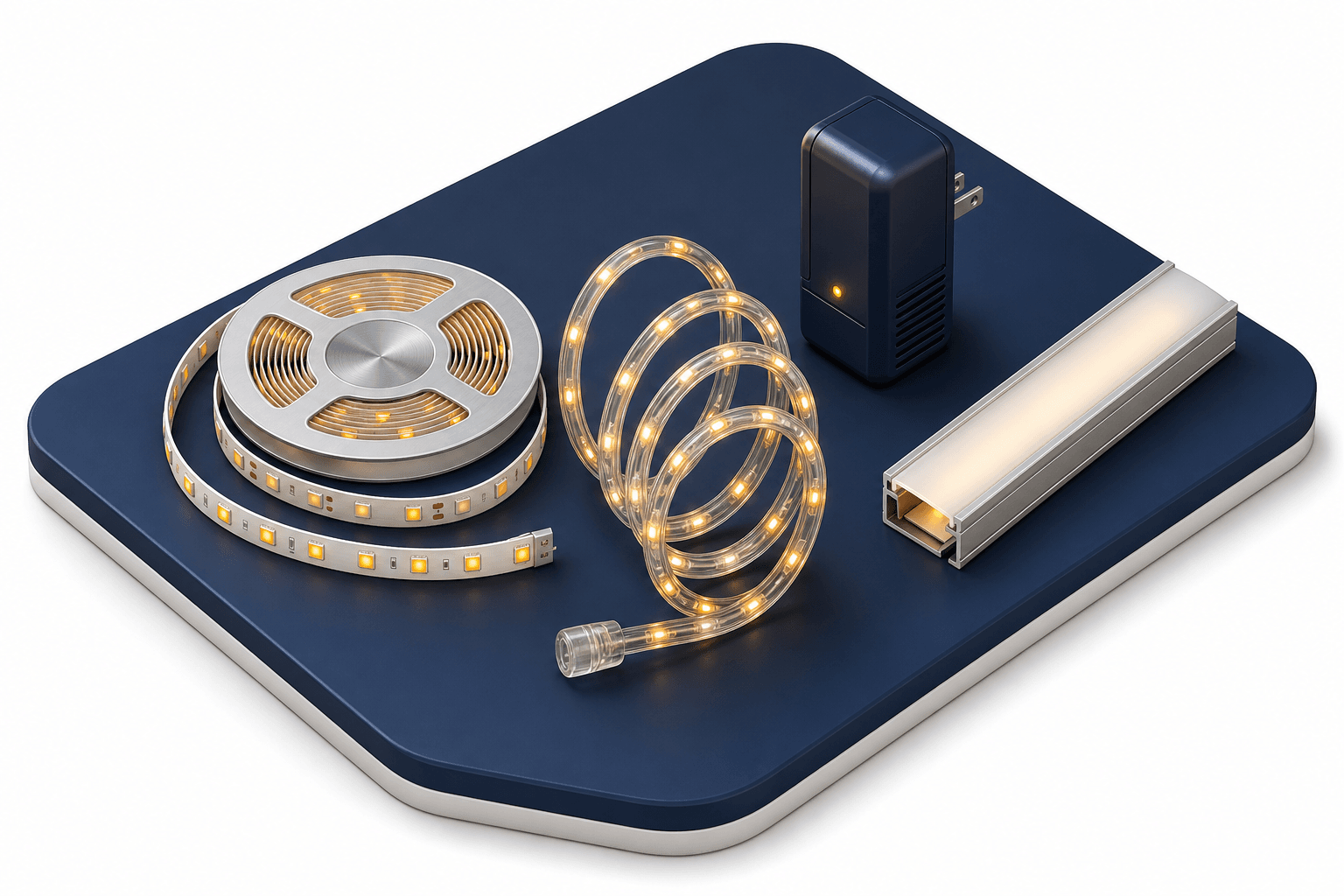
Key Takeaways
Strip lights are designed as permanent fixtures, while rope lights are more temporary — ideal for outdoor use or rented properties. Strip lights are generally brighter, but their electrical components are exposed, so they work best tucked into coving or under cabinets where the strip itself isn’t visible.
Here’s what I’ll cover:
- The key differences between strip and rope lights at a glance
- Power, cuttability, and IP ratings — the practical stuff most articles skip
- Which one to choose for a bedroom
- When rope lights are the better option
Strip vs. Rope Lights: Key Differences at a Glance
| Feature | Strip Lights | Rope Lights |
|---|---|---|
| Installation | Permanent (adhesive backing) | Temporary (draped or wrapped) |
| Appearance up close | Exposed circuitry | Fully encased in PVC |
| Outdoor use | Only when sealed (IP65+) | Many ship outdoor-ready |
| Color options | Full RGB / RGBIC | Usually single color |
| Brightness (5050 LEDs) | ~800–1,500 lm/m | ~300–800 lm/m |
| Voltage | 12V or 24V DC (driver required) | Often 120V/240V AC mains |
| Cuttability | Cut at marked intervals | Limited or fixed-length only |
| Best use case | Coving, under-cabinet, accent | Bedposts, patios, rentals |
The most obvious difference is where you place them. Strip lights are stuck down with adhesive backing and stay where you put them. Rope lights aren’t fixed to a surface — you wrap them around bedposts, drape them over a fence, or run them along a patio edge.
Up close, a strip light displays its components — the LEDs, resistors, and copper pads sit on a flexible PCB and look quite technical. That’s why they belong hidden in coving, in a false ceiling, or under cabinets and shelves. Rope lights are fully encased in flexible PVC, so the wiring is hidden — they look fine on display.
Color is the other big split. Rope lights are usually a single fixed color, while strip lights come in single-tone, tunable white, RGB (16.7 million colors), and RGBIC variants. RGBIC strips have addressable chips that each control a small segment of LEDs, so a single strip can display multiple colors and animated effects at once — a rainbow chase, for example.
Not every rope light is basic. Brands like Govee and Philips Hue sell app-controlled rope and neon-style products with full color control, Hue’s Lightstrip and Festavia ranges and Govee’s Neon Rope Light are the obvious examples.
They look like one continuous, uniform glow rather than visible dots, but they cost considerably more than a basic strip. You can mimic that uniform look on a regular strip with an aluminum channel and a diffuser cover.
Power, Voltage, and Cuttability
This is where most first-time shoppers get caught out. LED strip lights run on low-voltage DC — typically 12V or 24V — which means you need a driver (also called a transformer or power supply) to step mains voltage down. The strip itself can’t plug directly into a wall socket. Rope lights are usually wired for mains voltage (120V or 240V AC) and plug straight in.
Practically, that affects three things:
- Installation complexity — strip lights need a driver sized to the run length and total wattage
- Voltage drop — long DC strip runs lose brightness toward the end unless you re-inject power
- Safety — low-voltage strips are safer to handle and modify; mains rope lights are not
Cuttability is the other practical difference. Strip lights have marked cut lines every two to six LEDs (the exact interval depends on the strip), so you can trim them to length and rejoin sections with solder or clip connectors. Rope lights usually have to be used at their fixed factory length, or cut only at specific, widely spaced points. If your run needs to fit an exact dimension, strip wins.
Strip Lights Are Generally Brighter — Here’s Why
A typical 5050 strip light puts out roughly 800–1,500 lumens per meter. An equivalent rope light sits closer to 300–800 lumens per meter. Two things drive the gap: LED density, and the thick PVC encasing on rope lights, which scatters and absorbs some of the output.
Strip lights come in tiered densities, and the choice matters more than most shoppers realize:
- 30 LEDs/m — budget tier, visible dotting, fine for soft accent
- 60 LEDs/m — the standard, what most general-purpose installs use
- 120–240 LEDs/m — high-density, brighter, near-continuous light, the spec for diffused channels
If you want a brighter strip, 60 LEDs/m covers most rooms comfortably, and 120+ LEDs/m gives you the cleanest, dot-free line of light. High-density strips also produce more heat, which is why aluminum mounting channels are worth the modest extra cost — they dissipate heat away from the PCB and meaningfully extend the strip’s working life. A well-cooled strip is commonly rated for 25,000 to 50,000 hours; one stuck to a hot surface with no heat path will fail far sooner.
Outdoor Use and IP Ratings
If you’re putting lights anywhere they’ll meet weather, check the IP rating before anything else. The two digits tell you what the fixture is sealed against — the first is solids/dust, the second is water.
- IP20 — bare strip, indoor dry locations only
- IP65 — dust-tight, resistant to water jets from any angle (the minimum for general outdoor use)
- IP67 — protected against temporary immersion (good for ground-level patio installs)
- IP68 — full continuous submersion, the rating to look for around pools or fountains
Most rope lights ship at IP44 or higher because they’re encased in PVC by design. Strip lights default to IP20 and need either a sealed silicone coating, an IP-rated channel, or a heat-shrink sleeve to be safe outside. If you see a strip sold as “waterproof” but rated IP44, that’s splash-resistant only — fine under an overhang, not fine in driving rain.
Which Light Is More Suitable for a Bedroom?
If You Want Brighter, Permanent Lighting
Go with a strip light. If you own your home and already have coving or a false ceiling, you can tuck the strip in cleanly so the circuitry never shows. Pick a tunable-white or RGBIC option so you can dial brightness and color temperature up for getting dressed or using the room as a study, then down for winding down at night. Strips also dim well, which matters more in a bedroom than peak brightness does.
If You Want Ambient, Relaxation-Focused Lighting
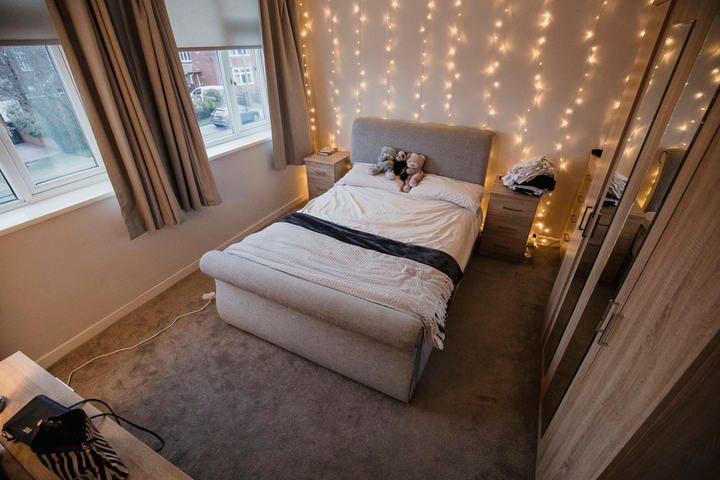
A rope light wrapped around the headboard is hard to beat. It’s gentle enough that the light won’t strain your eyes before sleep, bright enough to read by, and the encasing means no exposed wiring near your pillow. If you go this route, get a warm 2700K–3000K rope — that color temperature reads as “sunset” and supports winding down, where a cooler 5000K+ rope will keep you alert.
There’s no rule against running both — a strip in the coving for task light, a rope around the headboard for evenings. In my experience that combination ends up being the most flexible setup for a bedroom.
When to Choose Rope Lights Over Strip Lights
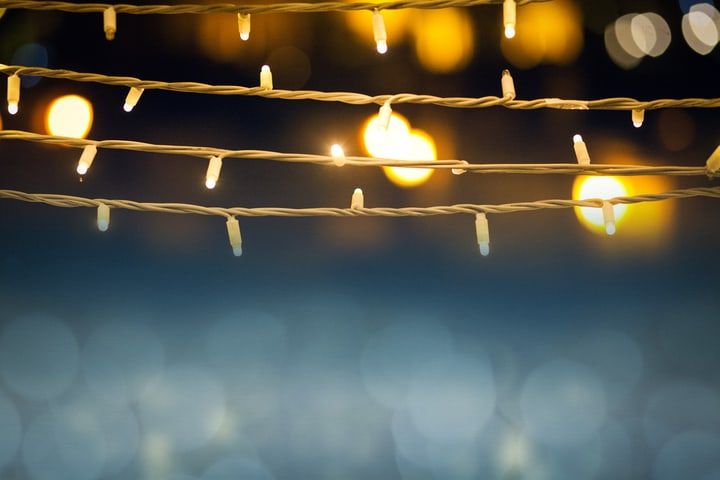
Strip lights are usually the default, but rope lights win in a few specific situations:
- You rent your apartment or live in student accommodation — strip adhesive can pull paint or wallpaper on removal, and that bill comes out of your deposit
- You want outdoor or seasonal lighting — summer patios, garden fences, holiday décor — that you’ll take down again
- You want temporary décor you can relocate without re-installing
- You can’t safely mount a strip — railings, fence posts, tree trunks, and most outdoor surfaces don’t take adhesive well
- You want a fixture that looks tidy out in the open, without channels or diffusers
Final Words
Strip and rope lights are close cousins, but the practical differences add up quickly once you stop looking at the photos and start thinking about install.
The rule I follow: if you rent, or the lights are going outside, start with rope. If you own and the strip will be hidden in a channel, coving, or under a cabinet, go with a strip — you’ll get more brightness, more color control, and a longer run-length for the money.
Whichever way you go, spend the few extra dollars on a decent driver, a proper IP rating for the location, and for strip lights, an aluminum channel. Those three things separate an install that lasts a decade from one that fails in eighteen months.