
Is Dimmer Switch Buzzing Dangerous?
Your dimmer chops the AC waveform 120 times per second, and that faint hum is just its inductor physically vibrating — harmless. A hot faceplate or crackling sound is a different story entirely.
 Eugen
EugenEugen Nikolajev
Creator of LED Lighting Info
Hi, I am Eugen. I was always one of those kids who had all sorts of weird lighting gadgets for every occasion.
Now, I want to share my knowledge and experience about lighting with you on LED Lighting Info.
Read my editorial standards
Key Takeaways
A dimmer's quiet hum is caused by magnetostriction — an internal inductor physically vibrating at 120Hz (twice the AC line frequency in North America) as the dimmer chops the AC waveform. This is normal. Buzzing becomes dangerous only when the switch feels hot to the touch, you hear crackling, or you smell burning — any of which point to arcing or overheating.
Is dimmer switch buzzing dangerous? In most cases, no — a faint hum from a dimmer is normal and harmless. But a loud buzz, a hot faceplate, or a crackling sound are different signals, and they deserve immediate attention.
This guide walks through why dimmers buzz, how to tell a safe hum from a warning sign, the fixes that actually work, and when to stop troubleshooting and call a licensed electrician.
Why Does Your Dimmer Switch Buzz?
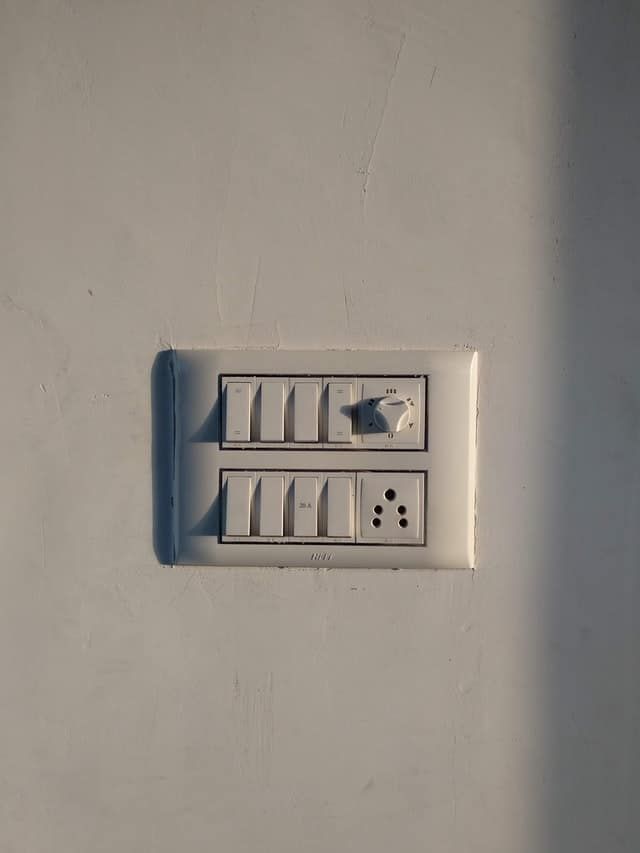
Almost every dimmer makes some sound. Put your ear close to one in a silent room with the bulbs dimmed below 50%, and you'll likely hear a faint hum. The source of that sound is inside the dimmer itself.
A standard (TRIAC) dimmer doesn't smoothly lower voltage. It rapidly chops segments out of each AC cycle — once per half-cycle, so 120 times per second on a 60Hz supply — cutting either the leading or trailing edge of the waveform. An incandescent filament is slow enough to average this out and dim smoothly. But the dimmer's internal inductor, used to smooth the chopped waveform, expands and contracts with each cycle of the magnetic field. That mechanical vibration is what you hear.
LED bulbs add a second source of noise. Inside every LED bulb is a small driver that converts your home's AC into the low-voltage DC the LED chip actually needs. That driver draws power very differently from an incandescent filament — which is why many older dimmers can't control LEDs cleanly, producing louder buzz, flicker, or outright failure to dim.
First: Is the Switch or the Bulb Buzzing?
Before troubleshooting, figure out where the noise is actually coming from. It's easy to blame the dimmer when the bulb is the culprit, or vice versa.
Quick test: with the power on and the dimmer engaged, remove the bulb. If the buzzing stops, the bulb is the source. If the dimmer still hums on its own, the switch itself is buzzing. This one-minute check prevents you from swapping the wrong component.
Common Causes of a Buzzing Dimmer
1. Loose Wiring
Shut off the breaker, remove the faceplate, and check that every wire is tightly screwed into its terminal. Loose connections are the most common and most serious cause of switch noise — they can also cause arcing behind the wall, which is a fire hazard. If you see scorching, blackened terminals, or melted insulation, stop and call an electrician.
2. Bulb and Dimmer Incompatibility
Older dimmers were designed for incandescent bulbs running on standard AC mains power (120V in North America, 220–240V in most of Europe). Pairing a modern LED bulb with a legacy dimmer often causes audible buzzing from either the dimmer or the bulb, because the LED's driver can't cleanly respond to the chopped waveform.
When an LED bulb is paired with an incompatible dimmer, the rapid switching of the electrical current can cause electromagnetic interference (EMI), which produces the humming sound you hear. The fix: use a dimmer explicitly rated for LED loads along with bulbs marked "dimmable" and listed as compatible with your dimmer model. Most LED manufacturers publish compatibility lists.
3. Overloaded Dimmer
Dimmer switches have much lower load ratings than the circuit they're on. A 15-amp circuit at 120V can carry up to 1,800 watts (1,440W for loads running 3+ hours, per the NEC's 80% rule). But the dimmer itself is the real limit: most residential dimmers are rated for only 600W with incandescents, and often just 150–250W with LEDs, because LED drivers draw power less efficiently and generate heat inside the dimmer.
Check the maximum wattage printed on the back of the dimmer, then add up the wattage of every bulb on the circuit. If you're over the rating, swap to lower-wattage bulbs or split the fixtures across two dimmers.
4. Aging Dimmer
Dimmer switches don't have a fixed expiration date. Warranties from major manufacturers like Leviton and Lutron range from a few years to lifetime on certain products, and a quality dimmer can last 15–20 years in a typical home. But normal wear and tear of the wiring and switch, repeated overloads, or heat can shorten that. If the dimmer is old, the buzzing is new, and the bulb load hasn't changed, replacement is usually the simplest fix.
5. CFL Bulbs
Most compact fluorescent (CFL) bulbs are not dimmable at all. Putting a non-dimmable CFL on a dimmer circuit can damage the bulb, the dimmer, or both, and in rare cases creates a fire risk. Even CFLs explicitly labeled "dimmable" contain internal ballasts that react poorly to phase-cut voltage, often producing a loud buzz at low brightness.
Since CFLs are being phased out in favor of LEDs, the best fix is usually to swap them for dimmable LED bulbs rated for use with your dimmer.
Mechanical Buzzing vs Electrical Noise (EMI)

Dimmer noise comes in two flavors, and the right fix depends on which one you have.
| Mechanical Buzzing | Electrical Noise (EMI) | |
|---|---|---|
| Sound character | Low-pitched hum or buzz from the switch itself | Higher-pitched whine or static, often audible through nearby radios or speakers |
| Common cause | Inductor vibration (magnetostriction) inside the dimmer at 120Hz; cheaply built incandescent bulbs with loose filaments | High-frequency noise radiating from the chopped AC waveform into the LED driver or wiring |
| Where it originates | The dimmer housing or the bulb filament | The LED driver or the supply wire to the fixture |
| Typical fix | Replace the dimmer with a better unit; reduce the wattage load; swap to rough-service or vibration-rated incandescents | Use an LED-rated dimmer; add a ferrite core around the supply wire near the driver |
If you've confirmed EMI is the culprit, the recognized fix is a ferrite core (also called a ferrite bead or choke) — a small clip-on ring that clamps around the wire feeding the fixture, as close to the driver as possible. It absorbs the high-frequency noise the dimmer generates. Ferrite cores are inexpensive and widely available from electronics suppliers.
❌ Do not place household magnets on electrical wiring. This is not a recognized troubleshooting step and won't help.
If you want to stick with incandescents on a dimmer, choose rough-service or vibration-rated bulbs built with reinforced filaments. Bulb shape alone (A19, candelabra, etc.) doesn't determine filament robustness — construction does.
Leading-Edge vs Trailing-Edge Dimmers
If you're shopping for a new dimmer, two technology labels matter for LED compatibility:
- Leading-edge (forward phase, TRIAC): The original dimmer technology, designed for incandescent and halogen bulbs. Robust and inexpensive, but often noisy and incompatible with modern LED drivers.
- Trailing-edge (reverse phase, ELV): Newer technology designed for electronic loads like LED drivers. Quieter, gentler on LED circuitry, and the right choice for modern all-LED homes.
Most packaging now states the dimmer's technology and its LED wattage range clearly. When in doubt, pick a trailing-edge dimmer explicitly rated for LEDs.
Does Your Dimmer Need a Neutral Wire?
Many smart dimmers and some high-performance LED dimmers require a neutral wire at the switch box. In homes built before the mid-1980s, the switch box often contains only hot and traveler wires — no neutral — and installing a neutral-required dimmer isn't possible without running new wiring.
When you open the box, if you see only two wires (one hot, one going to the fixture) and no bundle of white neutrals, look for a no-neutral-required dimmer, or plan a rewiring job with an electrician before buying a smart dimmer.
When to Call a Licensed Electrician
Most dimmer buzz is harmless and fixable. But stop using the dimmer and call a licensed electrician if you notice any of these signs:
- The dimmer faceplate is hot to the touch, not just warm
- Crackling or snapping sounds behind the wall
- A burning smell coming from the switch or fixture
- Discoloration, browning, or melting of the faceplate
- Buzzing combined with flickering across multiple fixtures on the same circuit
- The breaker trips when you turn the dimmer up
These are signs of electrical arcing, an overheating connection, or a failing component — any of which can lead to a house fire if left in service. Further reading: Do Dimmer Switches Get Hot?
When Lights Flicker Along With Buzzing

Buzzing combined with flickering usually points to one of three causes: an LED bulb paired with a leading-edge dimmer it can't talk to cleanly, a dimmable smart bulb installed behind a physical dimmer (two dimming systems fighting each other), or a loose connection at the switch or fixture. The issue is sometimes accompanied by a buzzing sound through nearby speakers as well.
If the bulbs are smart bulbs with built-in dimming, replace the dimmer with a standard on/off switch and dim from the app or voice assistant. Two dimmers on the same circuit rarely cooperate. See also: Do Smart Switches Require Smart Bulbs?
Picking a Compatible Dimmer and Bulb
Matching the bulb to the dimmer is the single most reliable way to eliminate buzz. Pair an LED-rated dimmer with LED bulbs explicitly labeled dimmable, and confirm the bulb model appears on the dimmer manufacturer's compatibility list before buying.
Here is a dimmer switch (Amazon) that works with LEDs as well as other bulb types. Pair it with dimmable LED bulbs (Amazon) from a compatibility-tested line, and you should avoid most mechanical and electrical buzzing problems.
FAQ
Is dimmer switch buzzing dangerous?
A faint hum is normal and harmless — most dimmers produce some sound because an internal inductor vibrates at 120Hz as the dimmer chops the AC waveform. Buzzing becomes dangerous when it's accompanied by a hot faceplate, crackling noise, burning smell, or visible discoloration. Those are signs of arcing or overheating and warrant a licensed electrician.
Will a buzzing dimmer cause a fire?
A buzzing dimmer on its own won't cause a fire. The danger comes from the conditions that sometimes produce buzzing — loose connections creating electrical arcs, or an overloaded dimmer generating excessive heat. If the switch is hot, crackling, or smells burnt, shut it off at the breaker and have it inspected.
Why do my LED bulbs buzz more than incandescents did?
LED bulbs contain a driver that converts AC to DC for the LED chip, and that driver doesn't cope well with the chopped waveform produced by older leading-edge dimmers. The result is often audible buzzing from the bulb, the dimmer, or both. An LED-rated trailing-edge dimmer and dimmable LED bulbs on the manufacturer's compatibility list usually solve it.
Can I stop dimmer buzz without replacing anything?
Sometimes. Tightening loose terminal screws, reducing the total wattage on the circuit, or clamping a ferrite core around the supply wire can reduce or eliminate buzz in specific cases. But when the dimmer and bulbs are fundamentally incompatible, replacement is the only real fix.
How long does a dimmer switch last?
There's no fixed expiration date. Manufacturer warranties from Leviton and Lutron range from a few years to lifetime on certain products, and a quality residential dimmer typically lasts 15–20 years. Normal wear, repeated overloads, and heat shorten that lifespan, so a dimmer that was fine for a decade and suddenly starts buzzing is often just worn out.
Final Thoughts
The short version:
- A quiet hum from a dimmer is normal — it's the inductor vibrating, not a safety issue.
- A hot, crackling, or smelly dimmer is an electrical hazard. Shut it off at the breaker and call a licensed electrician.
- LED buzz is almost always a compatibility problem. Use an LED-rated trailing-edge dimmer and dimmable LED bulbs from the manufacturer's compatibility list.
- Before replacing anything, pull the bulb to confirm whether the buzz is coming from the switch or the bulb, and tighten any loose terminal screws with the power off.
Have you tracked down a buzzing dimmer in your own home?