
What Determines The Brightness Of The Bulb?
A 60 W incandescent and a 9 W LED both land at around 800 lumens — which is exactly why wattage is a terrible way to shop for brightness.
 Eugen
EugenEugen Nikolajev
Creator of LED Lighting Info
Hi, I am Eugen. I was always one of those kids who had all sorts of weird lighting gadgets for every occasion.
Now, I want to share my knowledge and experience about lighting with you on LED Lighting Info.
Read my editorial standards
Key Takeaways
A bulb's brightness depends on its lumen rating, the power it receives (voltage × current), whether the circuit is wired in series or parallel, the fixture's light output ratio, and — for LEDs — the driver and dimmer compatibility.
Most light bulb specs are easy to decode — until you get to brightness.
Color temperature has the Kelvin scale. Color rendering has the CRI. Brightness has lumens — but lumens alone don't tell the full story. Voltage, current, wiring, bulb technology, fixture design, and (for LEDs) the driver inside the bulb all shape how much light actually reaches your eyes.
One caveat up front: wattage correlates with brightness only within the same bulb technology. A 60 W incandescent and a 9 W LED both produce around 800 lumens, so comparing watts across technologies is misleading. Always compare lumens.
Whether you're swapping a dim bulb, wiring a circuit, or troubleshooting a dimmer that buzzes, the factors below are what actually determine the brightness you see.
Voltage, Current, and Wattage: What Actually Affects Brightness?
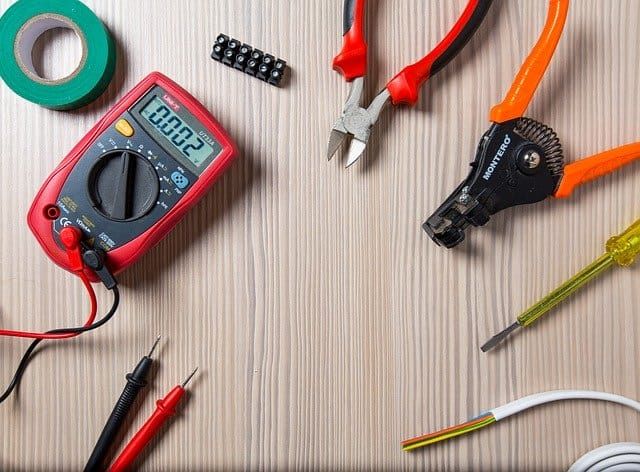
Brightness, light, and heat all come from the electrical power delivered to the bulb. Power is the product of voltage and current:
P = V × I (Power = Voltage × Current)
For a given bulb, more power means more brightness. But this only holds within one bulb technology and operating point — across technologies, efficacy (lumens per watt) varies enormously, which is why raw wattage isn't a fair brightness comparison.
Incandescent bulbs
Raising the voltage on an incandescent pushes more current through the filament, raising its temperature and its brightness. Every bulb has a rated voltage (printed on the packaging) that represents the maximum safe operating voltage. Exceed it and the filament overheats and fuses. Lowering the voltage simply dims the bulb.
LEDs
LEDs are current-driven devices, not voltage-driven. Their current-voltage curve is exponential: above the forward-voltage threshold, a tiny change in voltage causes a large change in current. Running an LED directly from a variable voltage supply would either under-drive it or destroy it.
That's why every consumer LED bulb contains a driver — a small circuit that accepts standard 120–277 VAC from the socket and delivers a regulated constant current to the LED chips. You don't adjust the LED current directly; you use a compatible dimmer that signals the driver.
There are two common ways an LED can be dimmed:
- Pulse-width modulation (PWM) works like a very fast light switch — flicking the LED fully on and off hundreds or thousands of times per second. The longer it stays on during each cycle (the duty cycle), the higher the average current and the brighter the LED appears. PWM supports a wide dimming range with no color shift, but can produce visible flicker or artifacts on camera.
- Constant-current reduction (CCR), or analog dimming, reduces the DC drive current directly. It's flicker-free but can shift color and struggles to dim below about 10% output.
Resistance and wiring
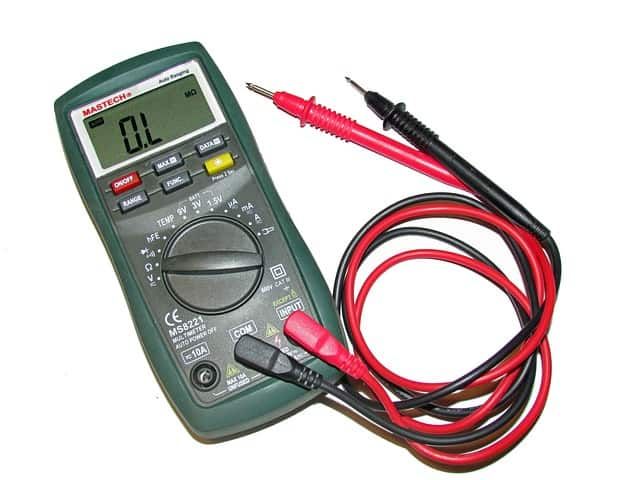
Resistance limits current — and by extension, brightness. For incandescents, any resistance in the wiring, connectors, or filament itself reduces the power reaching the glowing part of the bulb. In residential wiring, 12 AWG copper has lower resistance than 14 AWG and reduces voltage drop over longer runs, which matters most for fixtures far from the panel.
When an incandescent bulb first turns on, the cold filament has roughly ten times lower resistance than it does at operating temperature. This causes a brief inrush current — often 10× the running current — that rapidly heats the filament. As the filament heats, resistance rises and current settles to steady state. The bulb reaches full brightness within roughly 100 milliseconds.
Series vs. Parallel Wiring
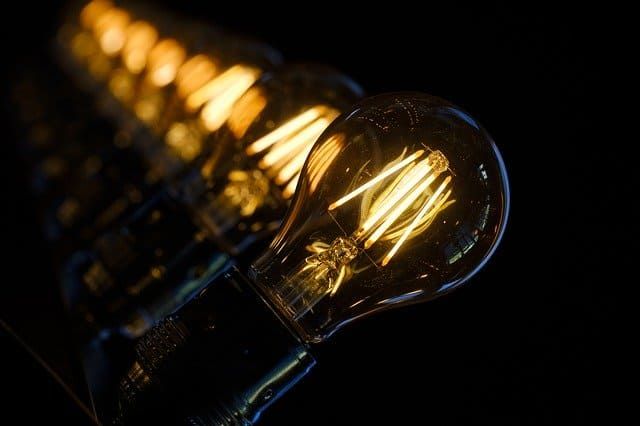
How the circuit is wired changes everything about how bulbs behave together. You have two options: parallel or series.
Parallel: each bulb sees the full source voltage, so all the bulbs are equally bright. If one bulb burns out, the rest stay lit because each one is effectively connected directly to the source. This is the standard for household wiring and for wiring appliances in the house.
Series: the bulbs share a single current path, and the supply voltage is divided across all of them. Add more bulbs and the voltage per bulb drops, so each one gets dimmer. If any bulb in the series fails, the whole circuit goes dark.
What about holiday string lights?
Traditional incandescent mini-light strings are built from short series segments (typically 10–50 bulbs) wired in parallel. Each bulb contains a tiny shunt wire designed to short itself out if the filament burns open, so the segment keeps working with a dead bulb. If the shunt works, only that one bulb goes dark. If the shunt fails, the entire 10–50 bulb segment goes out while the rest of the string stays lit.
Modern LED string lights don't use shunts — a failed LED typically shorts internally. Most are wired in parallel or hybrid layouts specifically for resilience, so a single failure rarely takes down neighboring bulbs.
| Feature | Series | Parallel |
|---|---|---|
| Voltage per bulb | Divided equally across bulbs | Full source voltage |
| Current | Shared by all bulbs | Independent per bulb |
| If one bulb fails | Whole circuit goes dark | Others stay on |
| Brightness as bulbs are added | Decreases | Unchanged |
| Home wiring standard | No | Yes |
Fixture and Optics
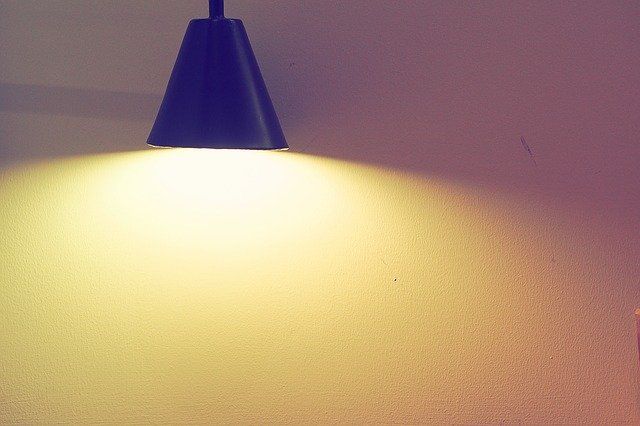
A bulb doesn't exist in isolation. The fixture it sits in, and the optics around it, shape how much of the bulb's output actually reaches you.
Fixture height and the inverse square law
Lowering a ceiling fixture doesn't make the bulb itself brighter — its total lumen output is fixed. What changes is the illuminance on the surface below, measured in lux. Because of the inverse square law, halving the distance between the fixture and the surface roughly quadruples the lux on that surface, so the room looks brighter even though the bulb is producing exactly the same light.
Light Output Ratio (LOR)
Light Output Ratio (LOR) is the percentage of the lamp's lumens that actually leave the fixture, after losses inside it. Typical ranges:
- Older luminaires with conventional lamps: 50–60% LOR (40–50% of the light is lost inside the fixture).
- Quality downlights: 80–90% LOR.
- Modern LED luminaires: often over 90% LOR.
The industry is increasingly reporting total luminaire efficacy (delivered lumens per watt) instead, which bundles LOR, lamp output, and driver losses into a single number.
Reflectors
Incandescent bulbs emit light in all directions from the glowing filament. To aim that light at a target area, fixtures use reflectors — but every bounce loses some light to absorption. The actual loss depends heavily on reflector material, finish, and geometry, which is exactly what the LOR figure above captures.
Beam angle and LED directionality
LEDs emit directionally, which is an advantage for spotlights and downlights where you want the light aimed. For omnidirectional coverage — like a table lamp replacement — choose a corn bulb or globe bulb, which arranges LED chips to approximate 360° output.
Lumens are the baseline
The single most important number on any bulb's packaging is its lumen rating. That's the measure of total light output the bulb produces. Everything else on this page tells you how much of that output actually ends up where you want it.
LED-Specific Factors
If an LED bulb isn't as bright as expected, four LED-specific issues are worth checking before you blame the bulb.
Dimmer compatibility
Not every LED bulb works with every dimmer. Most wall dimmers are TRIAC designs originally built for incandescent loads, and they come in two main flavors:
- Leading-edge (forward-phase) dimmers were designed for incandescents and don't always pair well with LED drivers. Symptoms include buzzing, flicker, and a narrow dimming range.
- Trailing-edge (reverse-phase) dimmers are designed for electronic loads and generally work better with LED bulbs.
Only bulbs explicitly labeled dimmable should be used on a dimmer circuit, and even then, check the manufacturer's compatibility list. A non-dimmable LED on a dimmer can flicker, buzz, or fail outright.
Lumen depreciation (L70)
LEDs don't fail suddenly — they get dimmer over time. The industry standard is L70: the number of operating hours at which the LED reaches 70% of its original lumen output. A quality residential LED might be rated L70 at 25,000 hours; premium commercial fixtures can reach 50,000+. Cheap LEDs sometimes dim noticeably within a year.
Driver efficiency
The driver isn't lossless. Typical LED drivers operate at 80–90% efficiency, so 10–20% of the wall power is dissipated as heat before it ever reaches the LED chips. A fixture's total efficacy (lm/W at the wall) already includes this loss. Cheap drivers sit at the low end of that range and degrade faster inside hot fixtures.
Color temperature and perceived brightness
Two bulbs with identical lumen ratings can look different to the eye. A 3000 K warm-white bulb and a 5000 K daylight bulb produce the same total light output, but the human eye is more sensitive to cooler tones in most lighting conditions, so the 5000 K bulb tends to appear brighter. It's not a defect in either bulb — it's a perceptual effect worth knowing when you compare products on a shelf.
Bottom Line
- Check lumens first — it's the only cross-technology brightness measure — and then look at the fixture's LOR or total luminaire efficacy.
- Wire home circuits in parallel so a single bulb failure doesn't take out the rest.
- For LEDs, verify dimmer compatibility and driver quality before assuming a brightness problem is the bulb itself.
FAQ
Is a higher-wattage bulb always brighter?
Only within the same technology. A 60 W incandescent and a 9 W LED both produce around 800 lumens, so they're equally bright despite a huge difference in wattage. Across different bulb types, compare lumens, not watts.
Why does my dimmable LED buzz or flicker when dimmed?
Usually a dimmer compatibility issue. Most wall dimmers are leading-edge TRIAC designs built for incandescents, and they don't always pair cleanly with LED drivers. Try a trailing-edge dimmer rated for LEDs, and confirm the bulb is explicitly labeled dimmable and listed on the dimmer manufacturer's compatibility chart.
Do LEDs get dimmer over time?
Yes, gradually. The L70 rating tells you how many hours the LED will run before output drops to 70% of its original lumens. Quality residential LEDs are typically rated L70 at 25,000 hours or more; premium commercial fixtures can reach 50,000+.
Does mounting a fixture lower actually make the bulb brighter?
The bulb's total light output doesn't change — only the illuminance (lux) on the surface below changes. Because of the inverse square law, halving the distance between fixture and surface roughly quadruples the lux reaching that surface, which is why the room looks brighter.
Why does a 5000 K daylight bulb look brighter than a 3000 K warm white bulb at the same lumen rating?
The human eye is more sensitive to cooler tones under most indoor lighting conditions, so a cooler bulb can appear brighter even when both have identical lumen output. It's a perceptual effect, not a difference in actual light output.